




FAST TRACT IT SERVICE L.L.C explains why enterprise system integration has become a critical foundation for operational efficiency, digital transformation, and long-term scalability in modern organizations.
Today’s enterprises rely on a wide range of software platforms—ERP systems, CRM tools, HR management software, financial applications, cloud services, cybersecurity platforms, and analytics dashboards. While each system may function effectively on its own, disconnected systems create data silos, inefficiencies, and operational blind spots.
Enterprise system integration connects these platforms into a unified ecosystem, enabling seamless data flow, real-time visibility, and coordinated decision-making across departments.
What Is Enterprise System Integration?
Enterprise system integration refers to the process of connecting disparate IT systems, applications, and databases so they can communicate and share data effectively.
Instead of operating in isolation, integrated systems work together through:
- APIs (Application Programming Interfaces)
- Middleware platforms
- Cloud integration tools
- Data synchronization frameworks
- Microservices architecture
The goal is to create a cohesive digital environment that supports business agility.
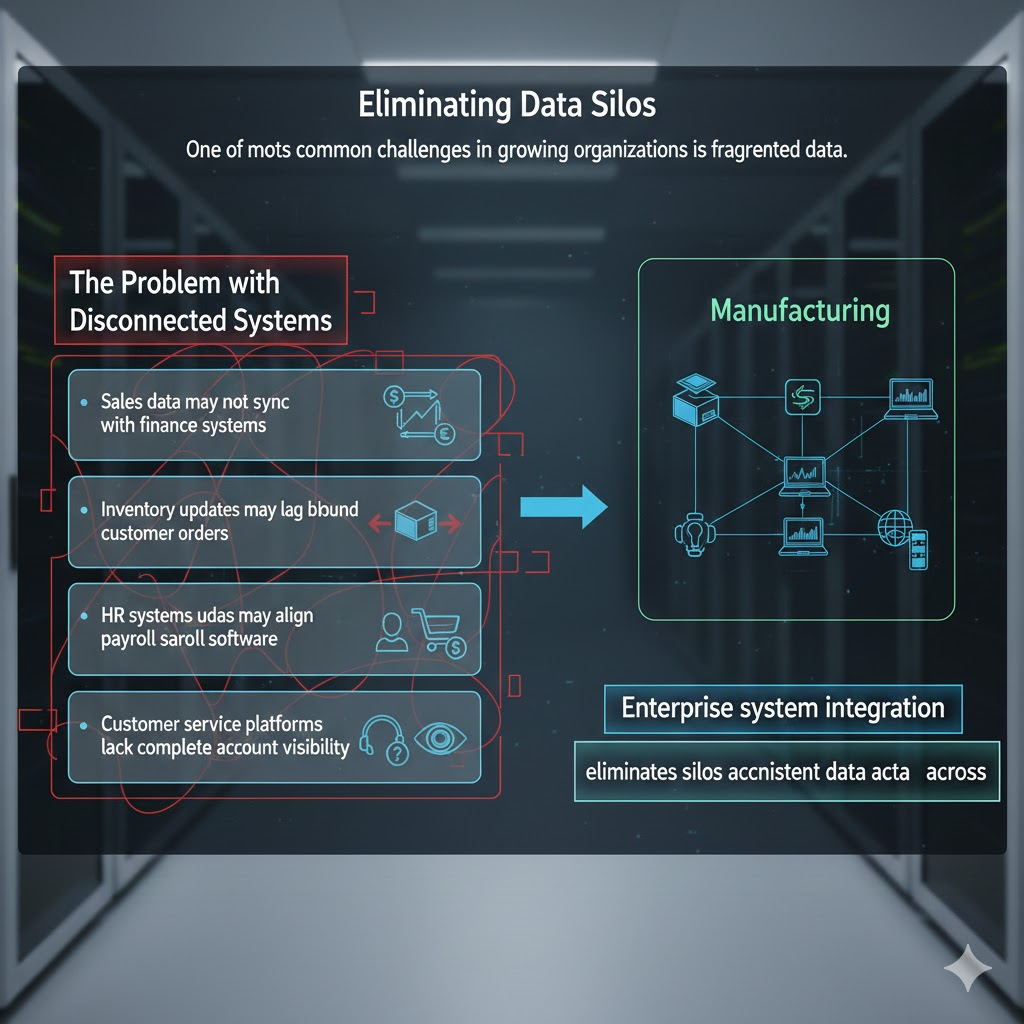
Eliminating Data Silos
One of the most common challenges in growing organizations is fragmented data.
The Problem with Disconnected Systems
When departments operate on separate platforms:
- Sales data may not sync with finance systems
- Inventory updates may lag behind customer orders
- HR systems may not align with payroll software
- Customer service platforms may lack complete account visibility
Enterprise system integration eliminates silos and ensures accurate, consistent data across the organization.
Improving Operational Efficiency
Efficiency is directly tied to how well systems communicate.
Streamlined Workflows
With enterprise system integration, businesses can:
- Automate data transfers between departments
- Reduce manual data entry
- Minimize duplicate records
- Improve response times
Integrated systems reduce human error and improve productivity.

Enabling Real-Time Decision-Making
In competitive markets, speed matters.
Unified Data Visibility
Integrated platforms provide:
- Centralized dashboards
- Real-time performance metrics
- Accurate financial reporting
- Immediate inventory updates
Enterprise leaders gain the visibility needed to make informed, timely decisions.

Supporting Digital Transformation
Digital transformation initiatives depend heavily on integration.
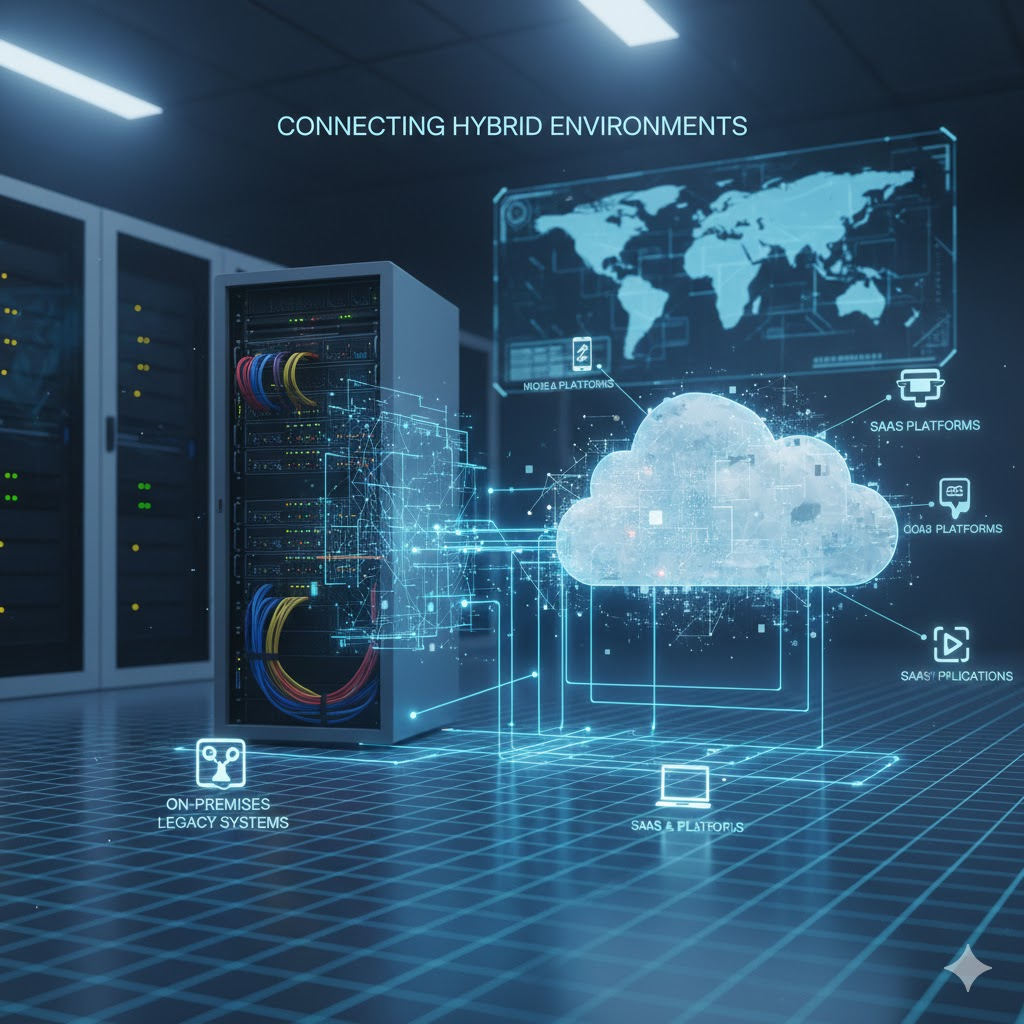
Connecting Cloud and On-Premises Systems
Modern enterprises often operate hybrid environments that combine:
- On-premises legacy systems
- Cloud-based applications
- SaaS platforms
- Mobile and remote access solutions
Enterprise system integration ensures these systems operate cohesively and forms a critical pillar of any successful digital transformation strategy focused on long-term scalability and innovation.
Enhancing Customer Experience
Customers expect seamless interactions.
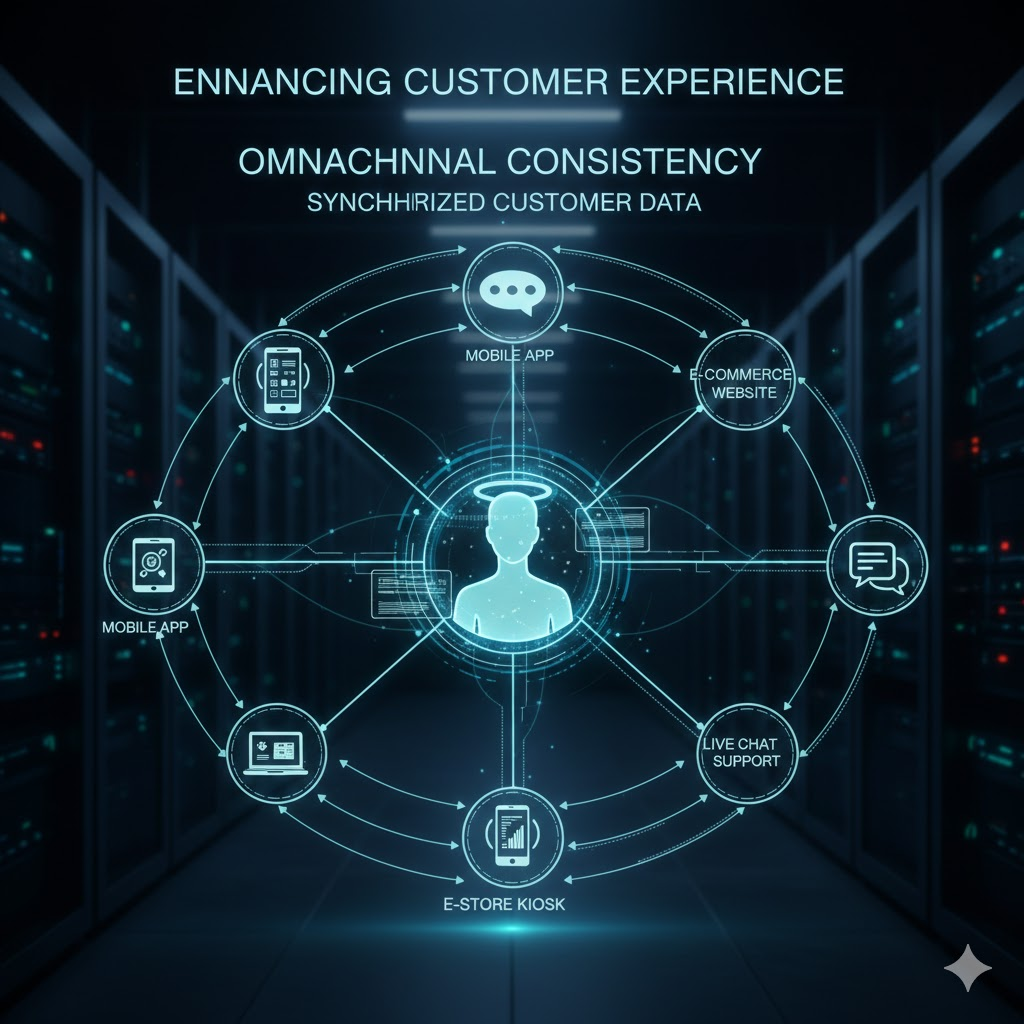
Omnichannel Consistency
Integrated systems allow organizations to:
- Synchronize customer data across channels
- Provide personalized experiences
- Track customer journeys in real time
- Deliver faster service responses
A unified backend infrastructure strengthens front-end engagement.
Strengthening Data Accuracy and Compliance
Data consistency supports regulatory compliance and risk management.
Reducing Compliance Risks
Enterprise system integration helps organizations:
- Maintain accurate records
- Track audit trails
- Automate compliance reporting
- Protect sensitive information
Regulated industries benefit significantly from integrated data governance.
Increasing Scalability and Flexibility
As businesses grow, their IT ecosystems expand.
Future-Ready Infrastructure
Enterprise system integration allows organizations to:
- Add new applications without disruption, including secure and scalable custom enterprise application development initiatives tailored to evolving business needs
- Scale cloud resources efficiently
- Integrate emerging technologies
- Expand internationally with minimal friction
Scalability supports long-term growth.
Supporting Automation and Innovation
Integrated systems enable advanced automation.
Intelligent Process Automation
When systems are connected, organizations can:
- Automate approval workflows
- Trigger cross-platform alerts
- Implement AI-driven analytics
- Deploy predictive maintenance systems
Enterprise system integration accelerates innovation by reducing operational complexity.
Reducing IT Complexity and Maintenance Costs
Disconnected systems increase management burden.
Simplified IT Management
Integrated environments allow IT teams to:
- Monitor systems from centralized dashboards
- Detect anomalies faster
- Manage updates more efficiently
- Reduce redundant software usage
This leads to improved cost efficiency over time.
Enterprise System Integration and Cybersecurity
Security must be considered during integration.
Securing Data Flows
Modern integration strategies include:
- Encrypted data transfers
- Identity and access management controls
- API security gateways
- Continuous monitoring systems
Properly implemented enterprise system integration enhances rather than weakens security posture.
Common Integration Challenges
Despite its advantages, integration requires careful planning.
Legacy System Compatibility
Older systems may lack modern API capabilities, requiring middleware solutions.
Data Standardization Issues
Different systems may use inconsistent data formats, requiring harmonization before integration.
Change Management
Employees must adapt to new workflows and digital processes.
Structured planning minimizes disruption.
Measuring the Impact of Enterprise System Integration
Organizations should track measurable outcomes such as:
- Reduction in manual processes
- Improved data accuracy
- Faster transaction processing
- Decreased operational costs
- Enhanced customer satisfaction scores
These metrics demonstrate ROI from integration efforts.
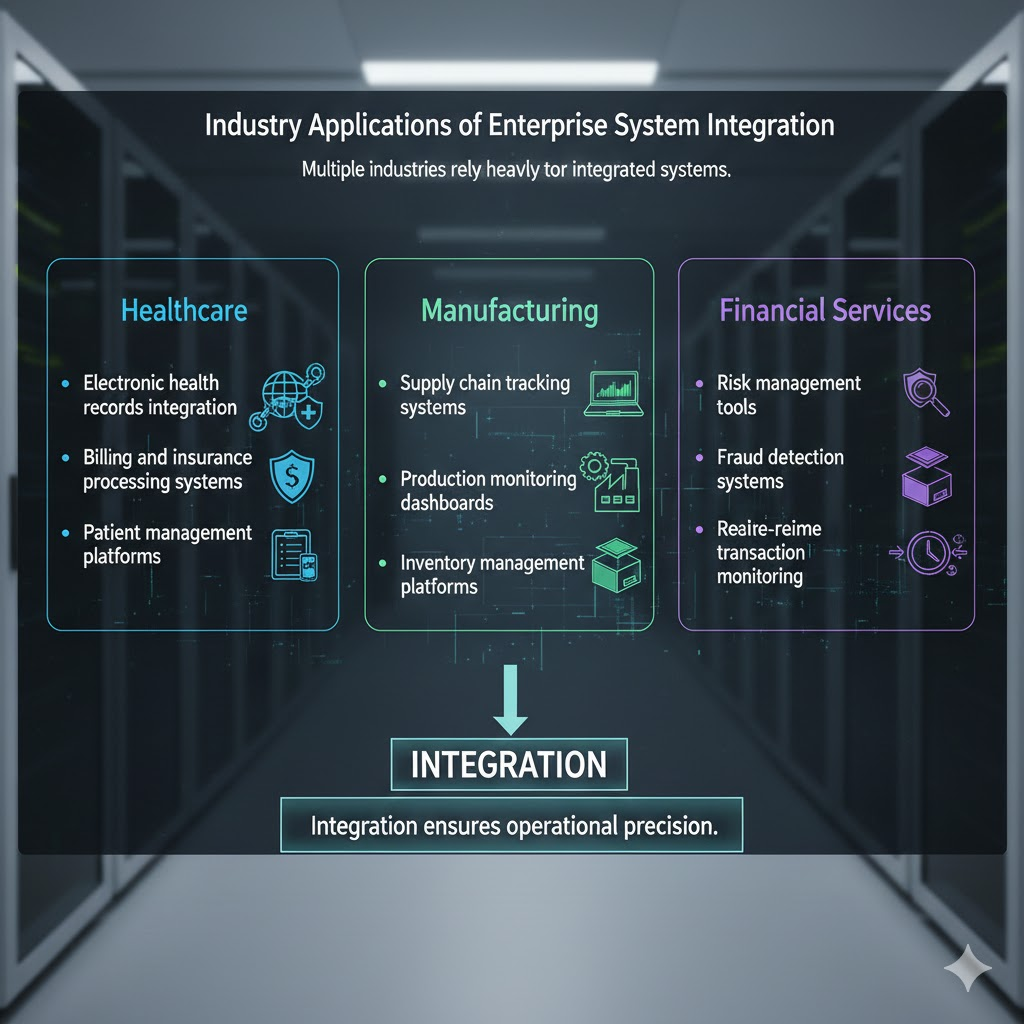
Industry Applications of Enterprise System Integration
Multiple industries rely heavily on integrated systems.
Healthcare
- Electronic health records integration
- Billing and insurance processing systems
- Patient management platforms
Manufacturing
- Supply chain tracking systems
- Production monitoring dashboards
- Inventory management platforms
Financial Services
- Risk management tools
- Fraud detection systems
- Real-time transaction monitoring
Integration ensures operational precision.
The Future of Enterprise System Integration
Emerging trends shaping integration include:
- API-first architecture
- Microservices development
- Event-driven integration models
- AI-powered data synchronization
- Low-code integration platforms
Future-ready organizations treat enterprise system integration as a continuous strategic initiative.
Conclusion
Modern enterprises cannot afford fragmented systems. Enterprise system integration is essential for operational efficiency, real-time decision-making, data accuracy, cybersecurity resilience, and scalable growth.
By connecting platforms into a unified digital ecosystem, organizations reduce complexity, enhance productivity, and improve customer experience.
Integration is not merely a technical upgrade—it is a strategic investment in long-term competitiveness.
FAST TRACT IT SERVICE L.L.C partners with enterprises to design and implement secure, scalable enterprise system integration solutions that streamline operations, strengthen governance, and support sustainable digital transformation.