




FAST TRACT IT SERVICE L.L.C provides expert insight into the most critical business IT infrastructure challenges growing companies encounter and how to overcome them with scalable, secure, and future-ready technology strategies.
As organizations expand, their IT environments become more complex. What once worked for a small or mid-sized company may quickly become inefficient, insecure, or costly as operations scale. Growth introduces new demands on systems, networks, data management, and cybersecurity. Without proper planning, infrastructure limitations can slow innovation, reduce productivity, and increase operational risk.
Understanding the most common business IT infrastructure challenges is the first step toward building a resilient and scalable foundation for sustainable growth.
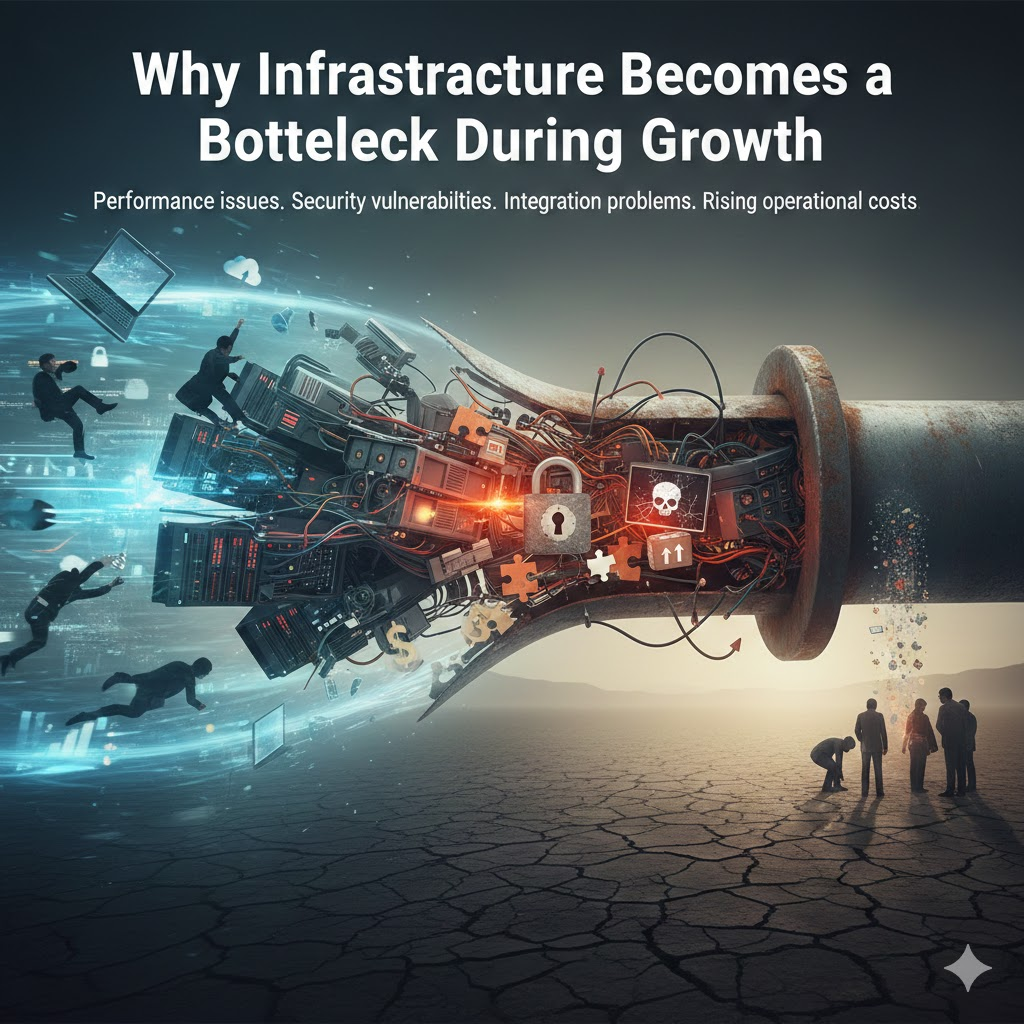
Why Infrastructure Becomes a Bottleneck During Growth
Rapid expansion often exposes weaknesses in existing IT systems. Many growing companies initially build infrastructure reactively, focusing on immediate needs rather than long-term scalability.
As the business grows, this approach can lead to:
- Performance issues
- Security vulnerabilities
- Integration problems
- Rising operational costs
Addressing business IT infrastructure challenges early prevents technology from becoming a barrier to growth.
1. Scalability Limitations
One of the most significant business IT infrastructure challenges is the inability to scale efficiently.
Outgrowing Legacy Systems
Legacy servers, storage systems, and network equipment may struggle to handle increased workloads, users, and data volumes. Symptoms include:
- Slow application performance
- System crashes during peak usage
- Delayed processing times
Without scalable architecture, growth can overwhelm infrastructure capacity.
Lack of Elastic Resources
Companies relying solely on on-premises infrastructure may lack the flexibility to scale resources up or down quickly. This often results in either:
- Overprovisioning (wasted resources)
- Underprovisioning (performance bottlenecks)
Modern scalable solutions, including hybrid and cloud-based systems, help resolve these issues.
2. Cybersecurity Risks Increase with Growth
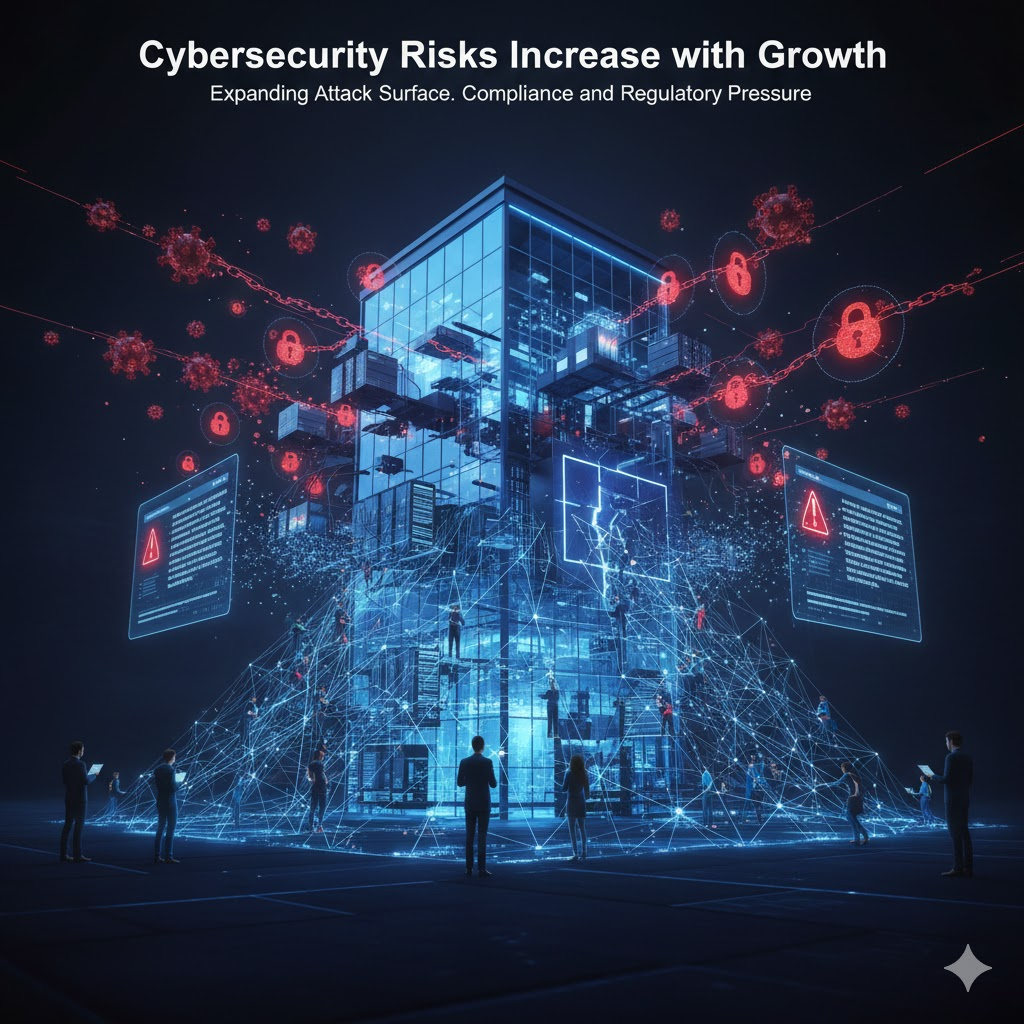
As companies expand, their attack surface grows. More users, devices, applications, and remote connections increase exposure to cyber threats.
Expanding Attack Surface
Common security-related business IT infrastructure challenges include:
- Inconsistent access controls
- Outdated firewalls and security tools
- Weak endpoint protection
- Limited visibility across systems
Without proactive security strategies, growing organizations become prime targets for cyberattacks.
Compliance and Regulatory Pressure
Industries such as healthcare, finance, and retail must comply with strict data protection regulations. As data volume increases, so does compliance complexity.
Failure to meet regulatory requirements can lead to fines, legal consequences, and reputational damage.
3. Network Performance and Connectivity Issues
Growth often requires expanded office locations, remote teams, and cloud integration. This creates network complexity.
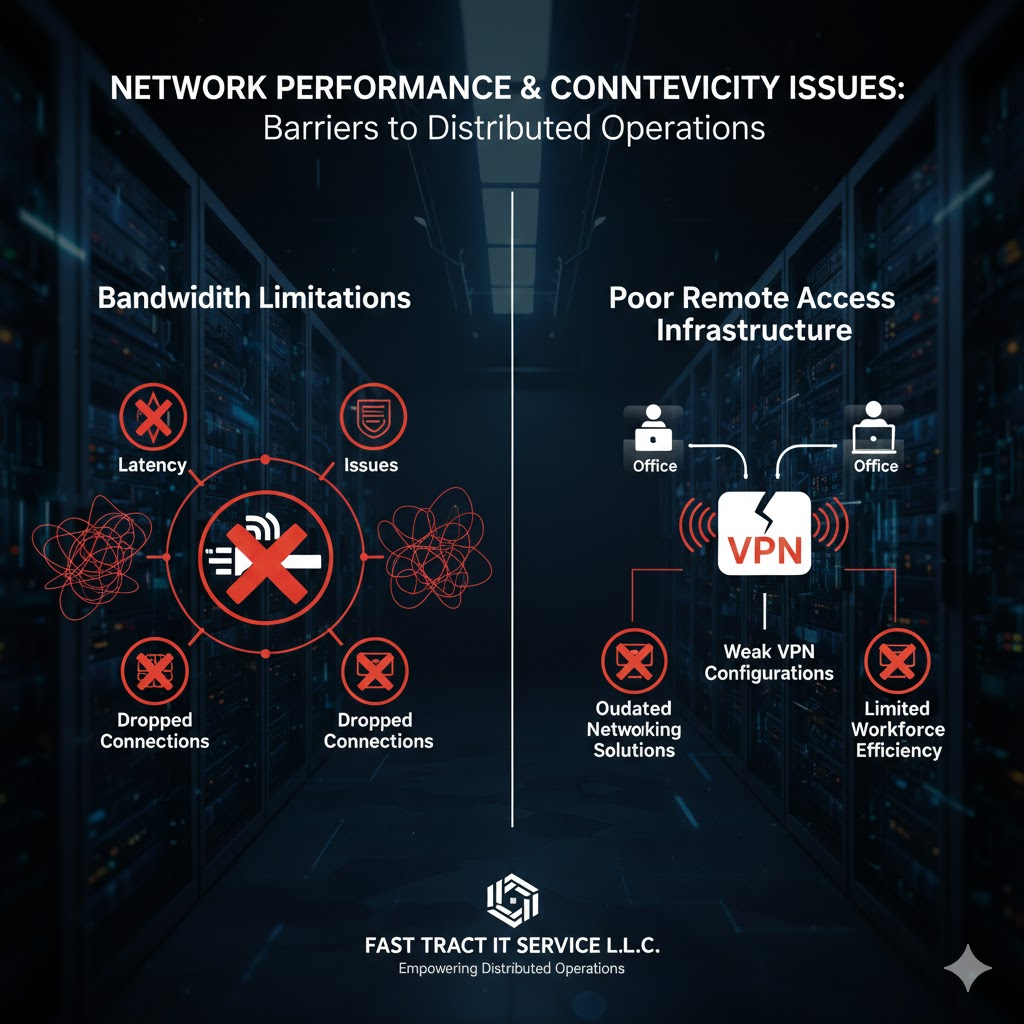
Bandwidth Limitations
Increased collaboration tools, video conferencing, and cloud applications can strain network capacity, leading to:
- Latency issues
- Dropped connections
- Reduced productivity
Network infrastructure must evolve to support distributed operations.
Poor Remote Access Infrastructure
Hybrid and remote work environments require secure, reliable remote access systems. Weak VPN configurations or outdated networking solutions can limit workforce efficiency.
4. Integration Challenges Between Systems
As companies scale, they adopt new software platforms, CRM systems, ERP tools, and cloud services. Without integration planning, systems become siloed.
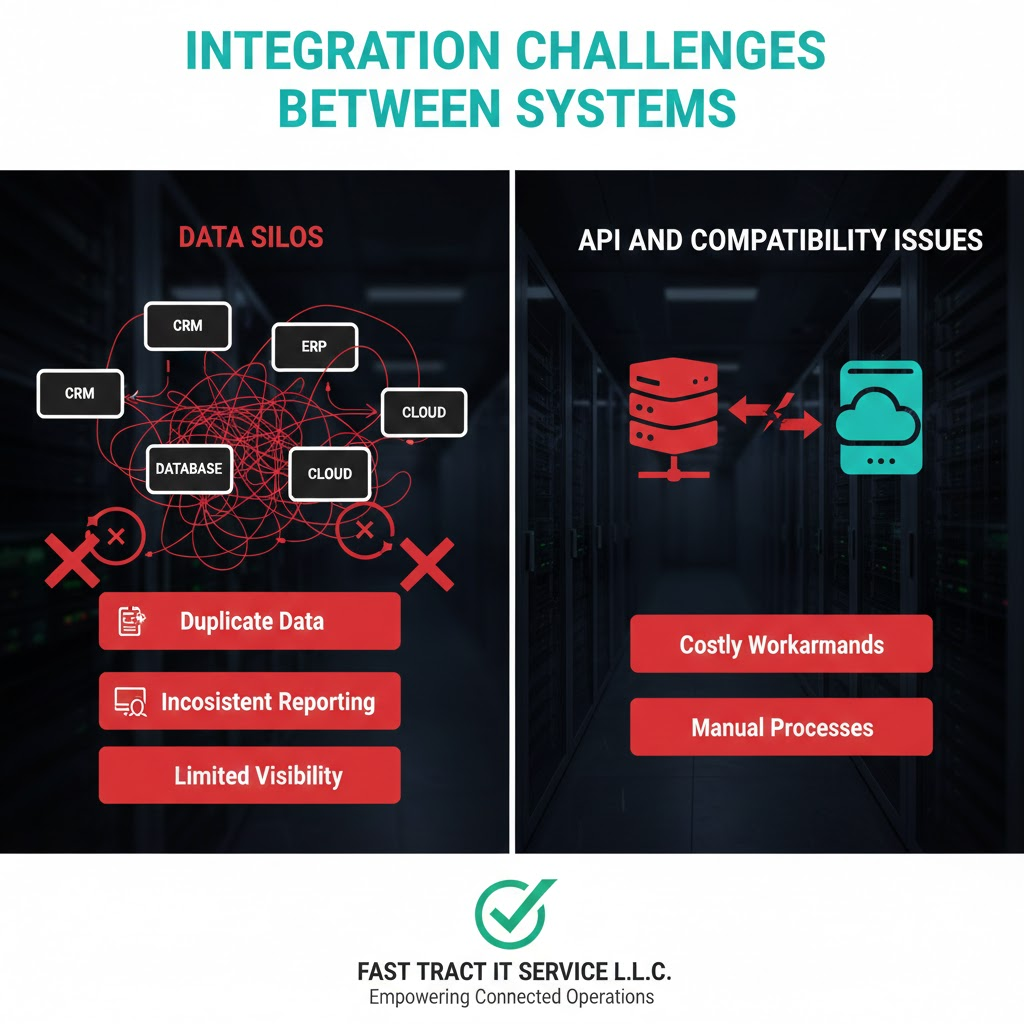
Data Silos
Disconnected systems create:
- Duplicate data
- Inconsistent reporting
- Limited visibility across departments
Breaking down silos is essential to overcome common business IT infrastructure challenges.
API and Compatibility Issues
Older systems may not integrate easily with modern cloud-based applications. This leads to costly workarounds or manual processes that reduce operational efficiency.
5. Rising IT Costs and Budget Constraints
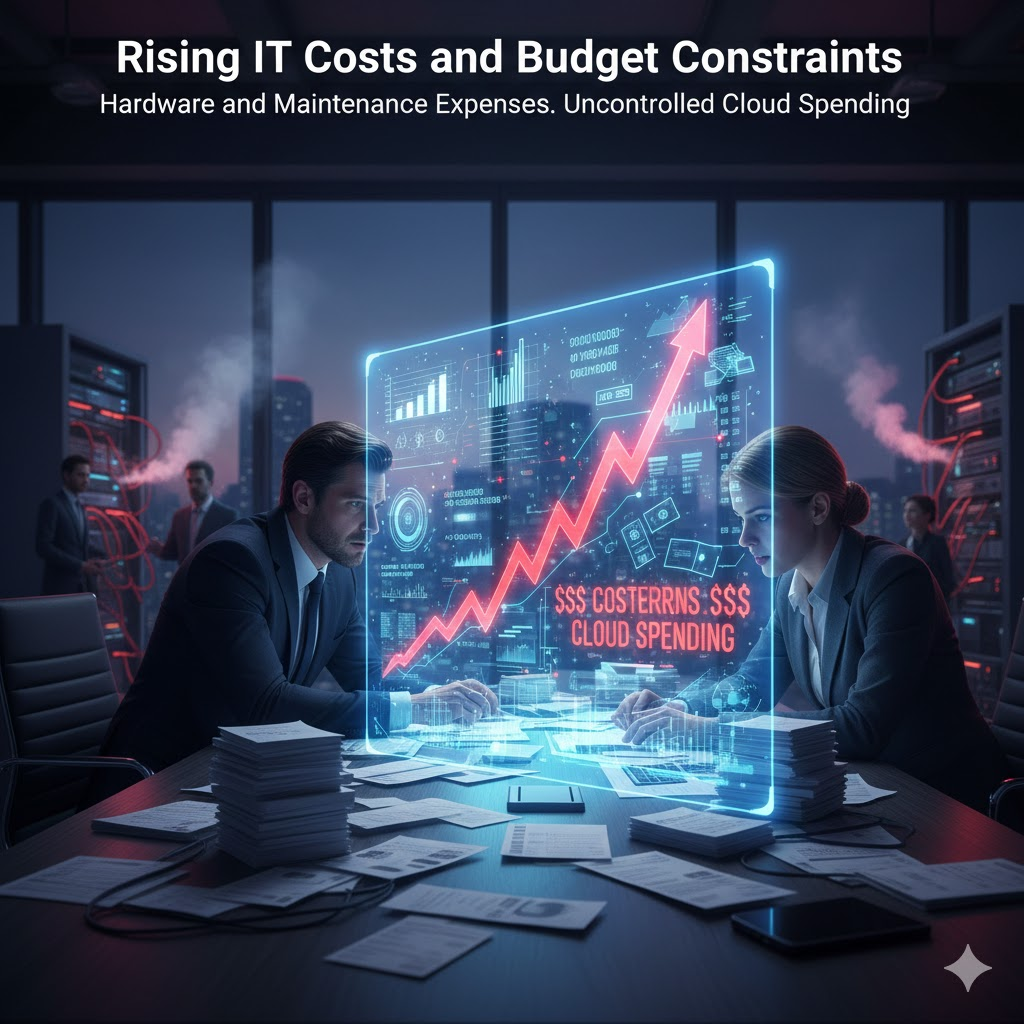
Growth increases IT spending, but without strategic oversight, costs can spiral out of control.
Hardware and Maintenance Expenses
Maintaining aging infrastructure requires:
- Frequent repairs
- Replacement hardware
- Increased energy consumption
These expenses accumulate quickly.
Uncontrolled Cloud Spending
While cloud services offer scalability, poor cost governance can lead to:
- Unused instances
- Redundant storage
- Oversized service plans
Cost optimization is a key solution to business IT infrastructure challenges in growing companies.
6. Limited IT Expertise and Resource Gaps

As infrastructure complexity increases, internal IT teams may struggle to keep up.
Skills Shortages
Growing organizations often lack specialists in areas such as:
- Cloud architecture
- Cybersecurity
- DevOps
- Infrastructure automation
This skills gap slows innovation and increases risk.
Overburdened IT Teams
IT staff may spend most of their time troubleshooting rather than focusing on strategic initiatives. This reactive approach limits business agility.
7. Data Management and Storage Challenges
Data growth is exponential. Without proper planning, storage systems can become inefficient and insecure.
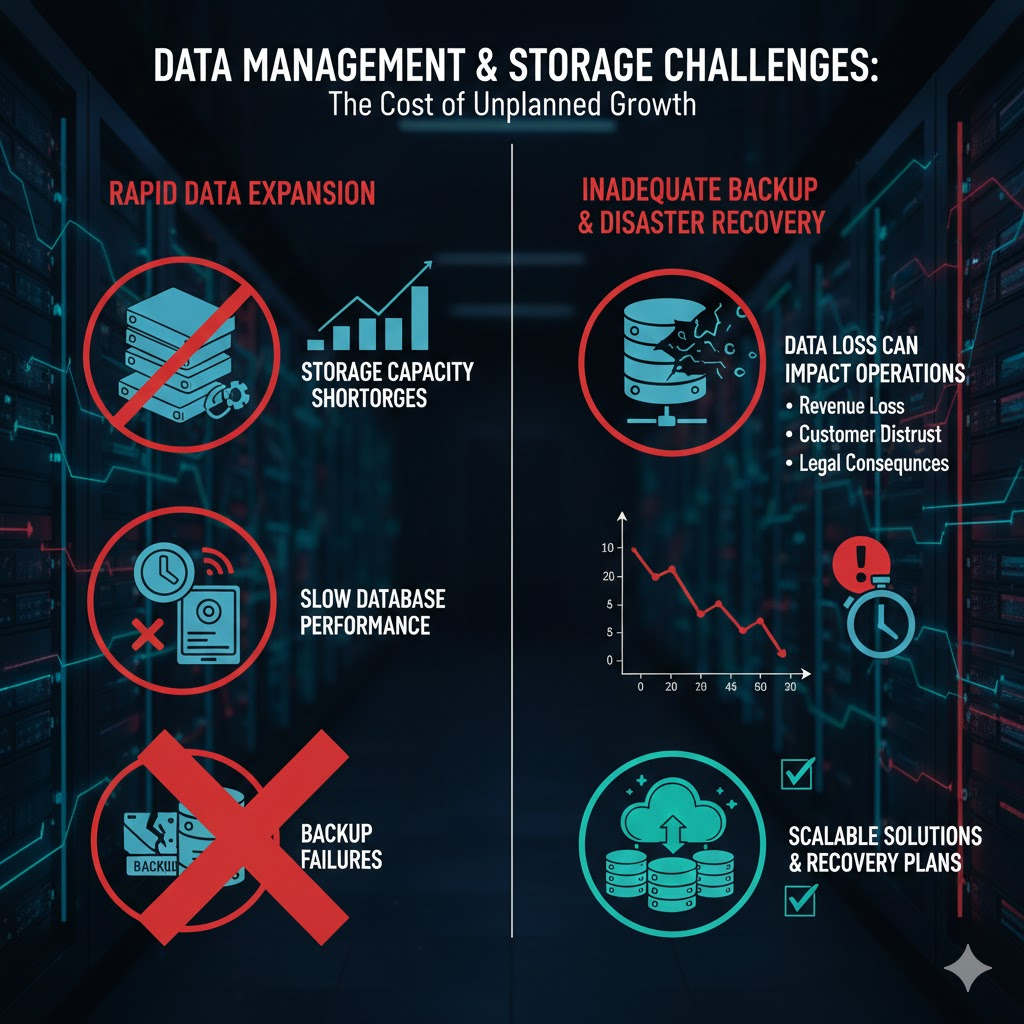
Rapid Data Expansion
Common data-related business IT infrastructure challenges include:
- Storage capacity shortages
- Slow database performance
- Backup failures
Organizations must implement scalable storage solutions and data lifecycle management policies.
Inadequate Backup and Disaster Recovery
Many growing companies underestimate the importance of disaster recovery planning. Without reliable backup systems, data loss can severely impact operations.
8. Lack of Infrastructure Standardization
As businesses expand, departments may independently adopt tools and platforms. This results in inconsistent infrastructure environments.
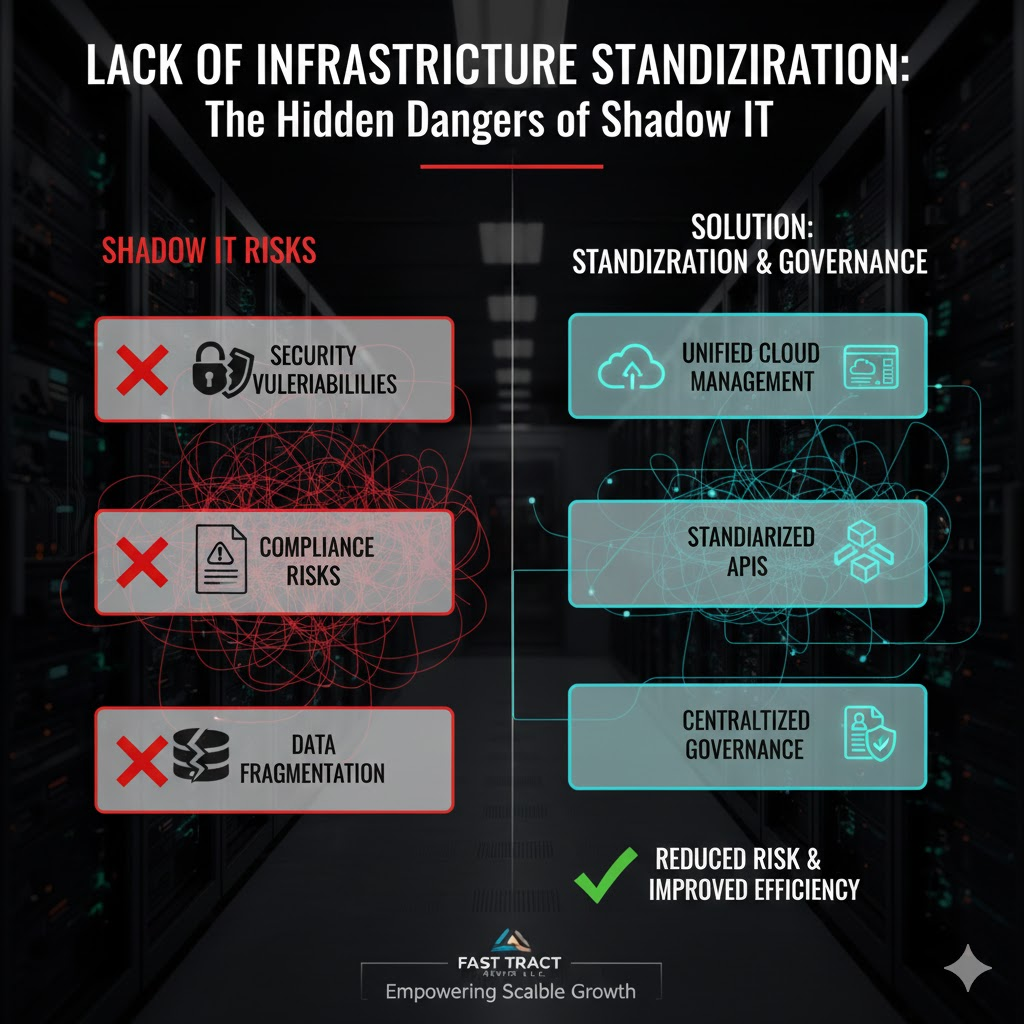
Shadow IT Risks
Employees may use unauthorized applications to solve immediate needs, creating:
- Security vulnerabilities
- Compliance risks
- Data fragmentation
Standardization and governance are essential to reduce risk.
9. Downtime and Reliability Issues
System downtime directly affects revenue and customer trust.
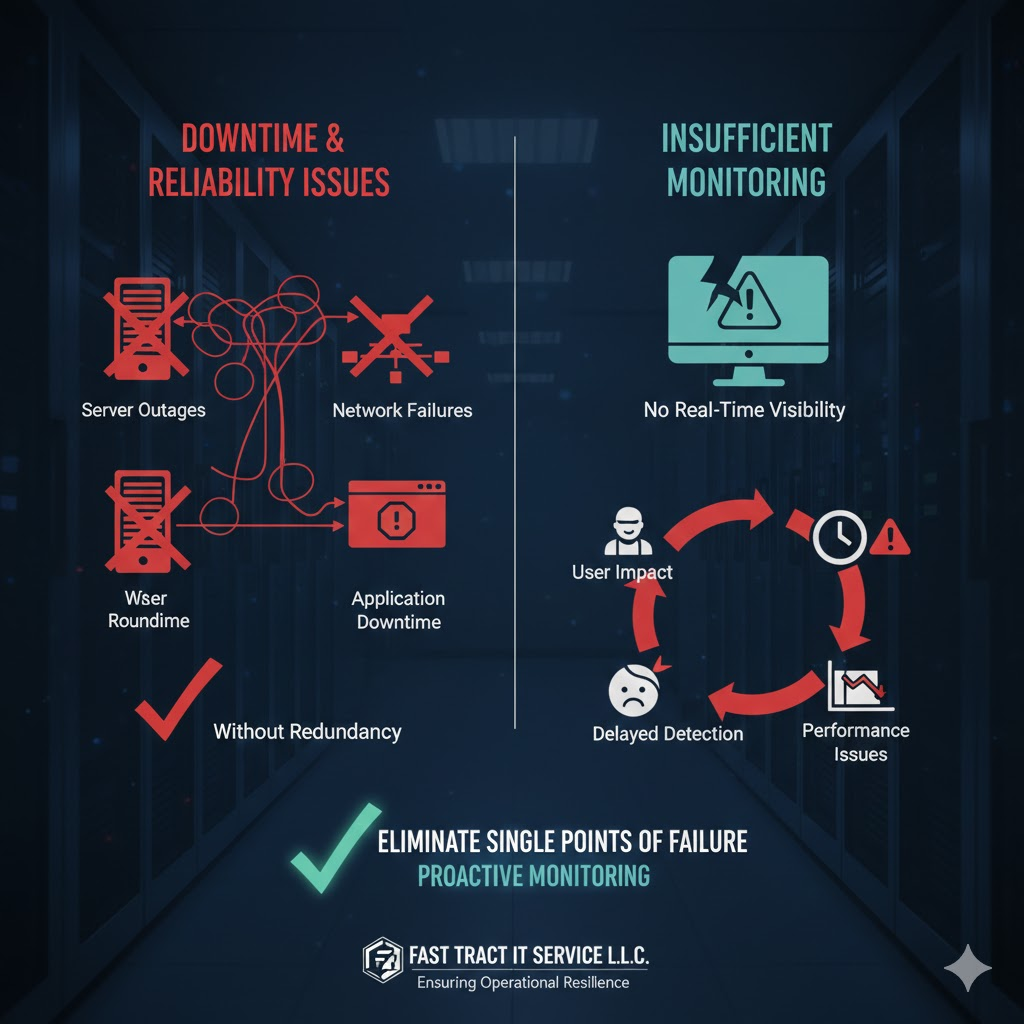
Single Points of Failure
Infrastructure without redundancy increases the likelihood of:
- Server outages
- Network failures
- Application downtime
Eliminating single points of failure is critical for operational resilience.
Insufficient Monitoring
Without real-time monitoring tools, IT teams may not detect performance issues until they impact users.
How Growing Companies Can Overcome These Challenges
Successfully addressing business IT infrastructure challenges requires strategic planning and modernization.
Adopt Scalable Cloud or Hybrid Solutions
Cloud and hybrid environments allow businesses to scale resources dynamically while maintaining control over critical systems.
Implement Proactive Cybersecurity Measures
Zero Trust architecture, multi-factor authentication, endpoint detection, and regular security audits reduce risk.
Invest in Automation and Monitoring
Automation tools streamline provisioning and configuration management. Advanced monitoring platforms provide real-time visibility into infrastructure health.
Develop a Long-Term IT Roadmap
A strategic roadmap aligns technology investments with business goals, ensuring infrastructure evolves alongside growth.
Partner with Experienced IT Providers
Working with a trusted managed service provider helps fill skill gaps, improve security posture, and optimize infrastructure performance.
The Long-Term Impact of Addressing Infrastructure Challenges
When companies proactively manage business IT infrastructure challenges, they gain:
- Improved operational efficiency
- Enhanced security and compliance
- Reduced downtime
- Better cost control
- Increased scalability
A strong infrastructure foundation enables innovation rather than restricting it.
Conclusion
Growth is a positive milestone for any organization, but it brings significant technological complexity. From scalability limitations and cybersecurity risks to integration issues and rising costs, business IT infrastructure challenges can quickly hinder progress if left unaddressed.
By investing in scalable architecture, strengthening security frameworks, improving cost governance, and leveraging expert guidance, growing companies can transform infrastructure into a competitive advantage.
FAST TRACT IT SERVICE L.L.C specializes in helping expanding businesses overcome business IT infrastructure challenges with secure, scalable, and future-ready technology solutions designed for long-term success.