




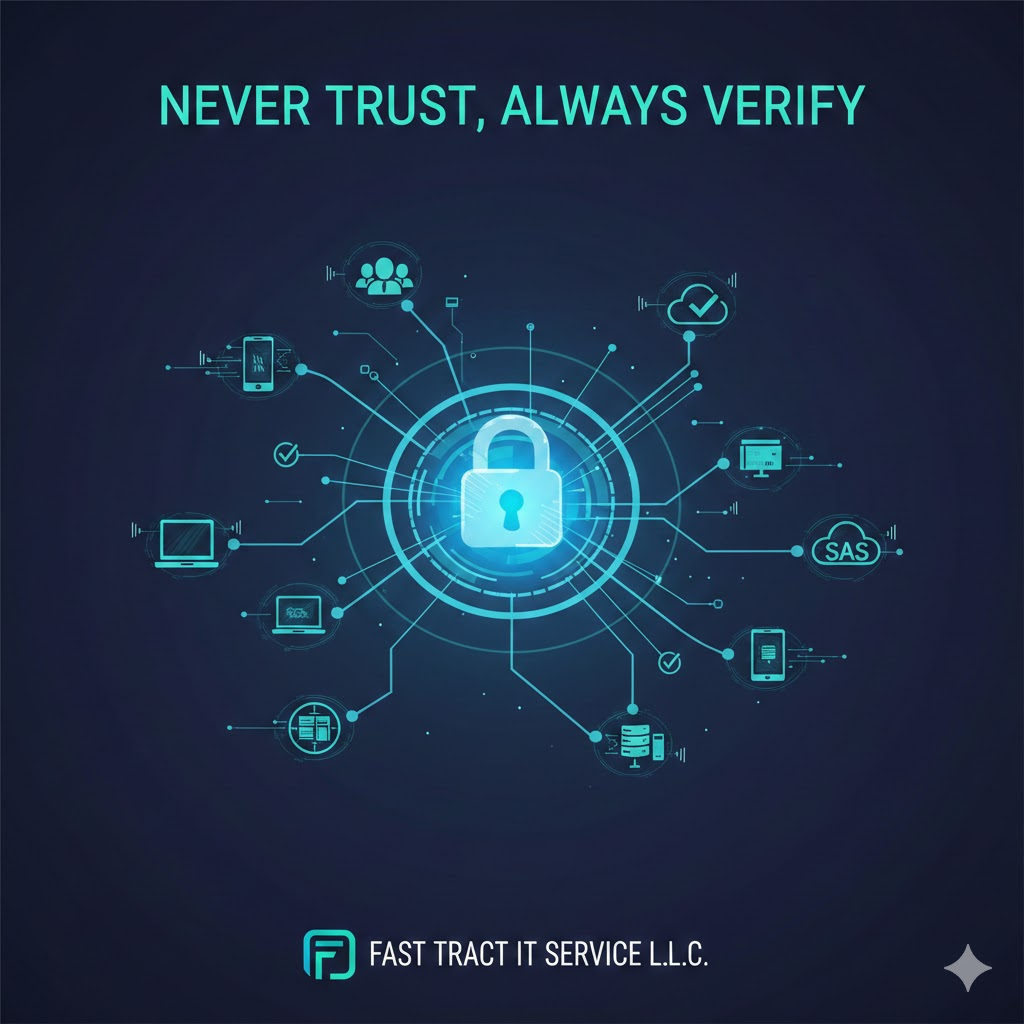
FAST TRACT IT SERVICE L.L.C provides executive-level insight into the zero trust security model, helping business leaders understand how this modern cybersecurity framework protects enterprises in an increasingly complex digital environment.
Cyber threats are evolving faster than traditional security models can defend against them. With remote work, cloud computing, SaaS platforms, and mobile devices reshaping the IT landscape, perimeter-based security is no longer sufficient. Executives must move beyond outdated “trust but verify” approaches and adopt a security posture built on continuous validation.
The zero trust security model offers a practical, scalable framework designed to reduce risk, strengthen compliance, and enhance business resilience.
What Is the Zero Trust Security Model?
The zero trust security model is a cybersecurity framework based on a simple principle:
Never trust, always verify.
Instead of assuming that users or devices inside a corporate network are safe, Zero Trust requires verification at every access point—regardless of location.
Core Principles of Zero Trust
The zero trust security model is built on several foundational concepts:
- Continuous identity verification
- Least-privilege access controls
- Micro-segmentation of networks
- Real-time monitoring and analytics
- Strong device authentication
This approach eliminates implicit trust and reduces the likelihood of lateral movement during a breach.
Why Executives Should Care About Zero Trust
Cybersecurity is no longer just an IT responsibility. It directly impacts revenue, reputation, regulatory compliance, and shareholder confidence.
Financial Impact of Cyber Incidents
Data breaches can lead to:
- Regulatory fines
- Legal costs
- Lost customers
- Reputational damage
- Operational disruption
As outlined in our analysis of the real business cost of a cybersecurity breach, financial losses often extend far beyond immediate remediation expenses, impacting long-term brand value and shareholder confidence.
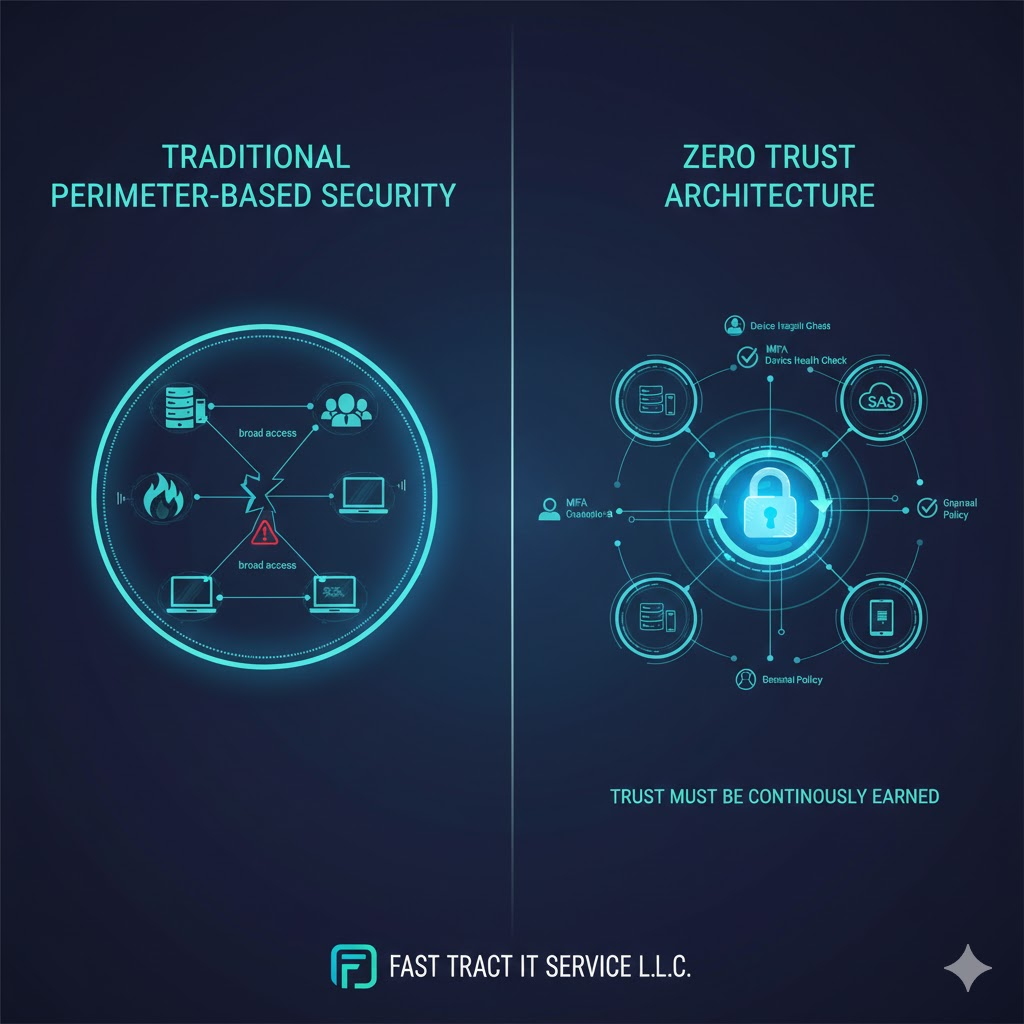
How Zero Trust Differs from Traditional Security Models
Understanding the difference between legacy security and Zero Trust is essential for strategic decision-making.
Traditional Perimeter-Based Security
Older models focused on:
- Firewalls
- VPN access
- Network segmentation based on internal vs. external users
Once inside the network, users often had broad access privileges.
Zero Trust Architecture
The zero trust security model assumes breach and enforces:
- Identity-based authentication
- Device health checks
- Granular access policies
- Continuous risk evaluation
Trust is never permanent—it must be continuously earned.
Key Components of the Zero Trust Security Model
Successful Zero Trust implementation requires multiple integrated technologies and processes.
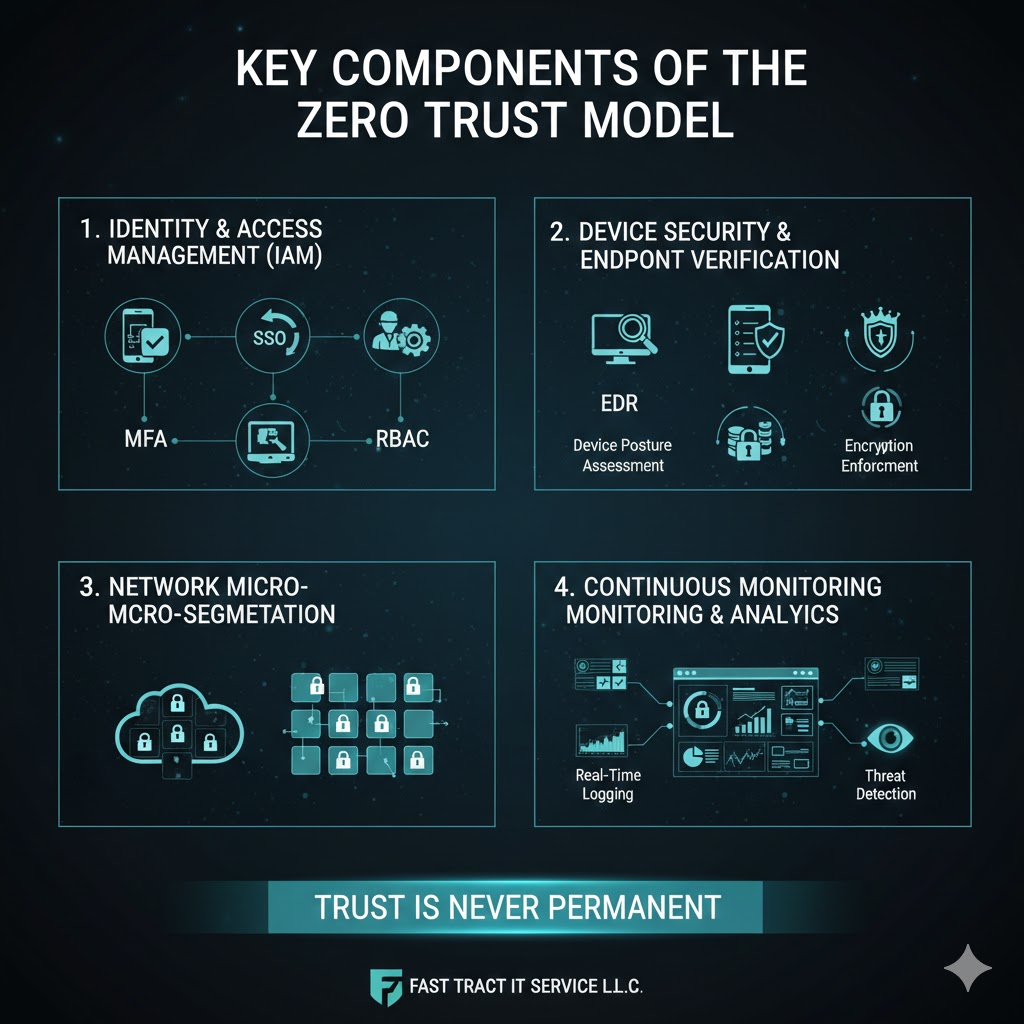
1. Identity and Access Management (IAM)
Identity is the foundation of Zero Trust.
Organizations must implement:
- Multi-factor authentication (MFA)
- Single sign-on (SSO)
- Role-based access control (RBAC)
- Privileged access management (PAM)
Limiting access strictly to what users need reduces exposure.
2. Device Security and Endpoint Verification
Every device accessing corporate resources must meet security standards.
This includes:
- Endpoint detection and response (EDR)
- Device posture assessment
- Encryption enforcement
- Patch compliance validation
Unsecured devices are denied access automatically.
3. Network Micro-Segmentation
Micro-segmentation divides networks into smaller, controlled segments.
If an attacker gains access to one segment, they cannot easily move laterally across the environment.
This containment strategy is a critical strength of the zero trust security model.
4. Continuous Monitoring and Analytics
Zero Trust relies heavily on real-time visibility.
Advanced analytics platforms monitor:
- Login behavior
- Unusual data transfers
- Privilege escalations
- Suspicious traffic patterns
Behavioral anomalies trigger automated alerts or access restrictions.
Zero Trust in Cloud and Hybrid Environments
Modern enterprises operate across public cloud, private cloud, and on-premises systems.
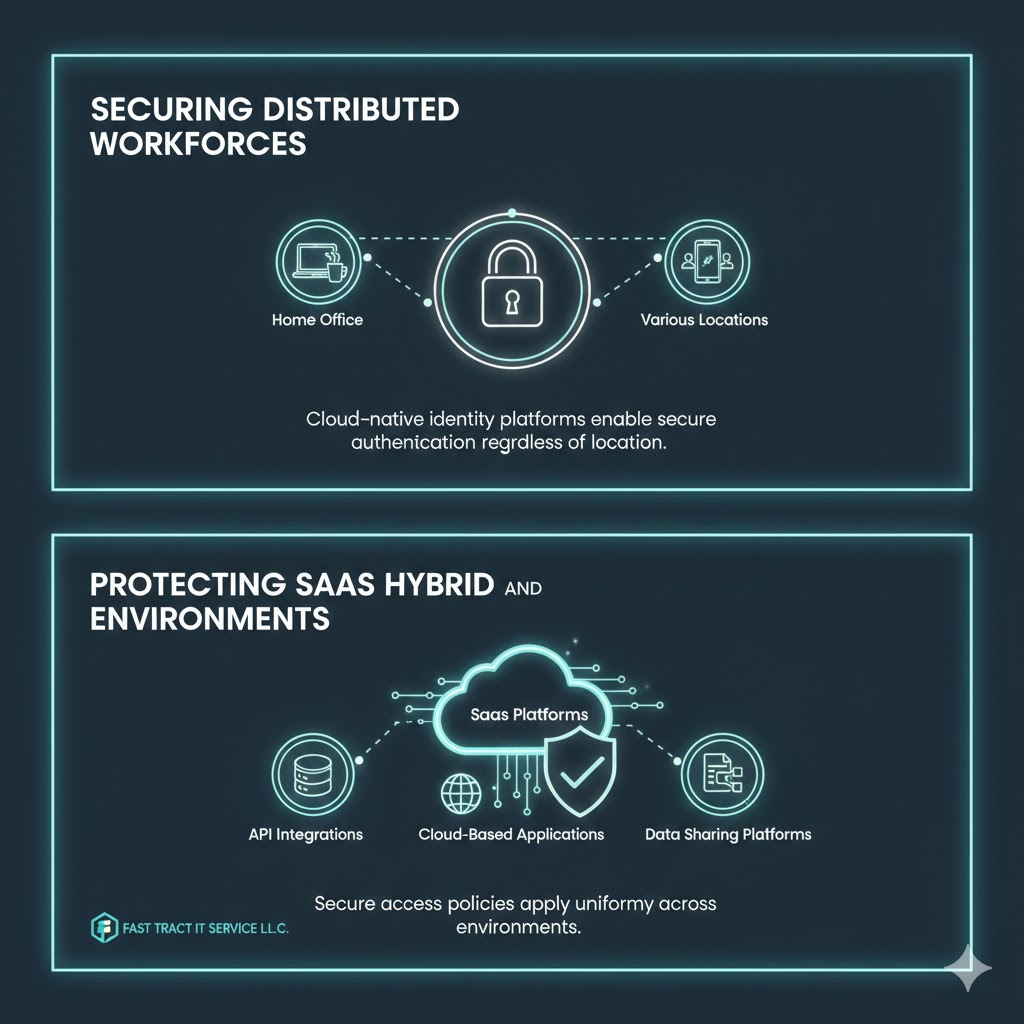
Securing Distributed Workforces
With remote work now common, users access systems from various locations and devices. The zero trust security model ensures secure access without relying solely on VPNs.
Cloud-native identity platforms enable secure authentication regardless of location.
Protecting SaaS Applications
SaaS platforms introduce new vulnerabilities. Zero Trust frameworks extend protection to:
- Cloud-based applications
- API integrations
- Data sharing platforms
Secure access policies apply uniformly across environments.
Implementation Roadmap for Executives
Adopting Zero Trust does not require a complete system overhaul overnight. Instead, organizations should take a phased approach.
Step 1: Conduct a Security Assessment
Identify:
- Critical assets
- High-risk access points
- Current vulnerabilities
- Compliance gaps
A clear understanding of risk exposure informs the Zero Trust roadmap.
Step 2: Strengthen Identity Controls
Deploy:
- MFA across all systems
- Role-based access policies
- Strict administrative privilege controls
Identity protection is the starting point.
Step 3: Segment and Monitor
Implement:
- Micro-segmentation
- Real-time logging
- Threat detection systems
Continuous monitoring ensures rapid incident response.
Step 4: Automate Security Responses
Automation reduces human error and speeds containment.
Modern zero trust security model implementations leverage AI-driven tools to:
- Detect anomalies
- Block suspicious access
- Isolate compromised systems
Automation strengthens resilience.
Common Misconceptions About Zero Trust
Despite its growing adoption, some executives misunderstand Zero Trust.
“Zero Trust Means Zero Productivity”
Some believe increased authentication will slow operations. In reality, modern identity solutions provide seamless access experiences while strengthening protection.
“Zero Trust Is Only for Large Enterprises”
Small and mid-sized organizations face similar cyber risks. The zero trust security model is scalable and adaptable to businesses of all sizes.
“Zero Trust Is a Product”
Zero Trust is not a single tool—it is a strategic framework integrating multiple technologies and processes.
Business Benefits Beyond Security
While cybersecurity is the primary objective, Zero Trust also delivers broader advantages.
Improved Regulatory Compliance
Continuous monitoring and access controls simplify compliance with:
- Data protection regulations
- Industry security standards
- Audit requirements
Reduced Operational Risk
Granular access controls limit insider threats and reduce accidental data exposure.
Stronger Customer Trust
Demonstrating advanced cybersecurity measures enhances brand credibility and competitive positioning.
Measuring the Success of Zero Trust Implementation
Executives should monitor measurable outcomes such as:
- Reduction in security incidents
- Faster incident response times
- Improved compliance audit results
- Decreased unauthorized access attempts
These metrics validate the effectiveness of the zero trust security model.
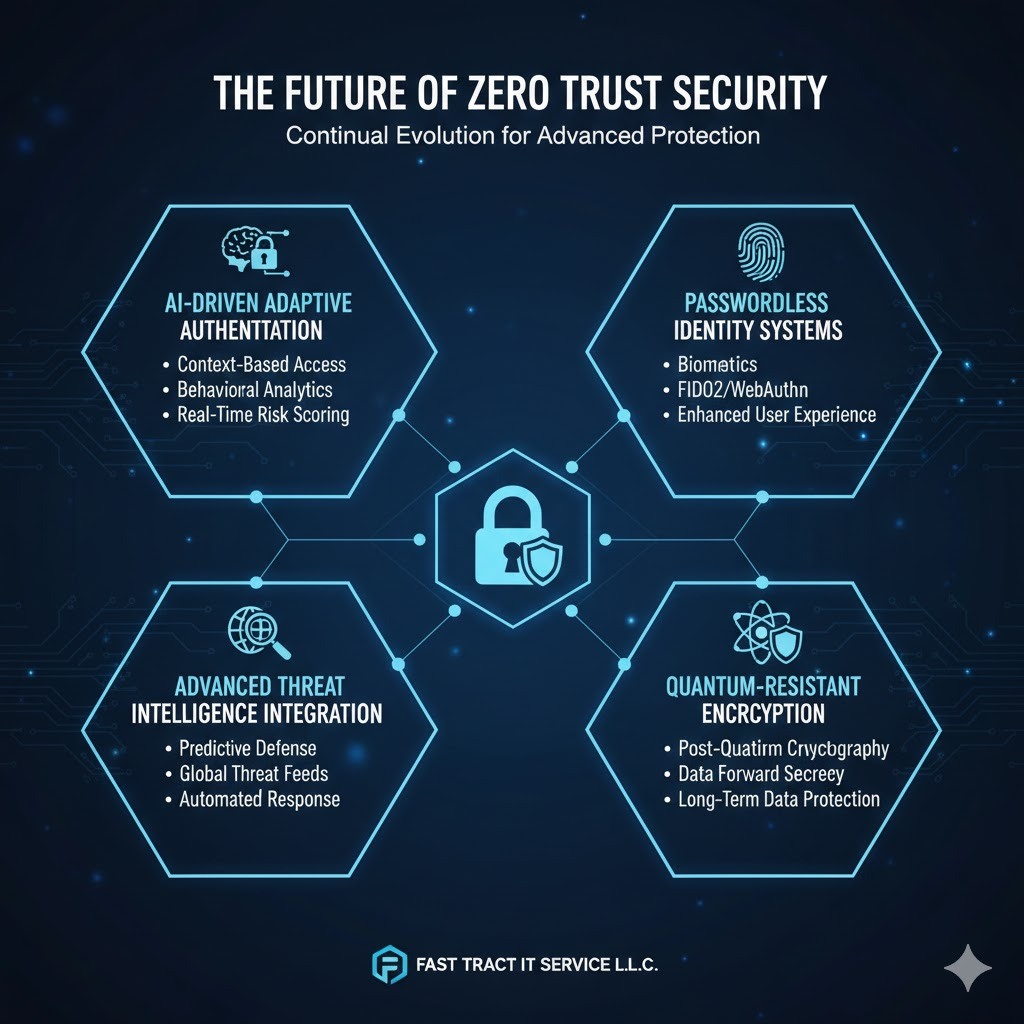
The Future of Zero Trust Security
Zero Trust continues evolving with:
- AI-driven adaptive authentication
- Passwordless identity systems
- Advanced threat intelligence integration
- Quantum-resistant encryption
As cyber threats become more sophisticated, Zero Trust will remain central to enterprise security strategies.
Conclusion
The zero trust security model is no longer a theoretical concept—it is a practical necessity for modern enterprises. By eliminating implicit trust, enforcing strict identity verification, and continuously monitoring system activity, organizations can significantly reduce cyber risk.
For executives, adopting Zero Trust is a strategic decision that strengthens security, supports compliance, and protects long-term business continuity. When integrated into a broader digital risk management strategy, Zero Trust enables organizations to proactively identify vulnerabilities, assess third-party exposure, and align cybersecurity initiatives with enterprise-wide risk governance.
In today’s distributed, cloud-driven digital landscape, trust must be verified at every step.
FAST TRACT IT SERVICE L.L.C helps organizations design and implement comprehensive zero trust security model frameworks that protect critical assets, secure hybrid environments, and ensure resilient operations in an increasingly complex threat landscape.