




FAST TRACT IT SERVICE L.L.C presents an in-depth analysis of why hybrid environments are redefining enterprise IT architecture and why every organization needs a strong hybrid cloud strategy in 2026 and beyond.
Modern organizations are under constant pressure to innovate faster, scale efficiently, and maintain strong security and compliance standards. As digital transformation accelerates, businesses are realizing that relying solely on public or private cloud environments is no longer enough. Instead, a well-defined hybrid cloud strategy is emerging as the preferred approach for balancing flexibility, performance, and control.
A hybrid model allows companies to combine public cloud services with private cloud infrastructure and on-premises systems. This integrated environment gives organizations the agility of the public cloud while retaining the governance and customization capabilities of private infrastructure. As a result, hybrid cloud is rapidly becoming the standard architecture for modern enterprises.
What Is a Hybrid Cloud Strategy?
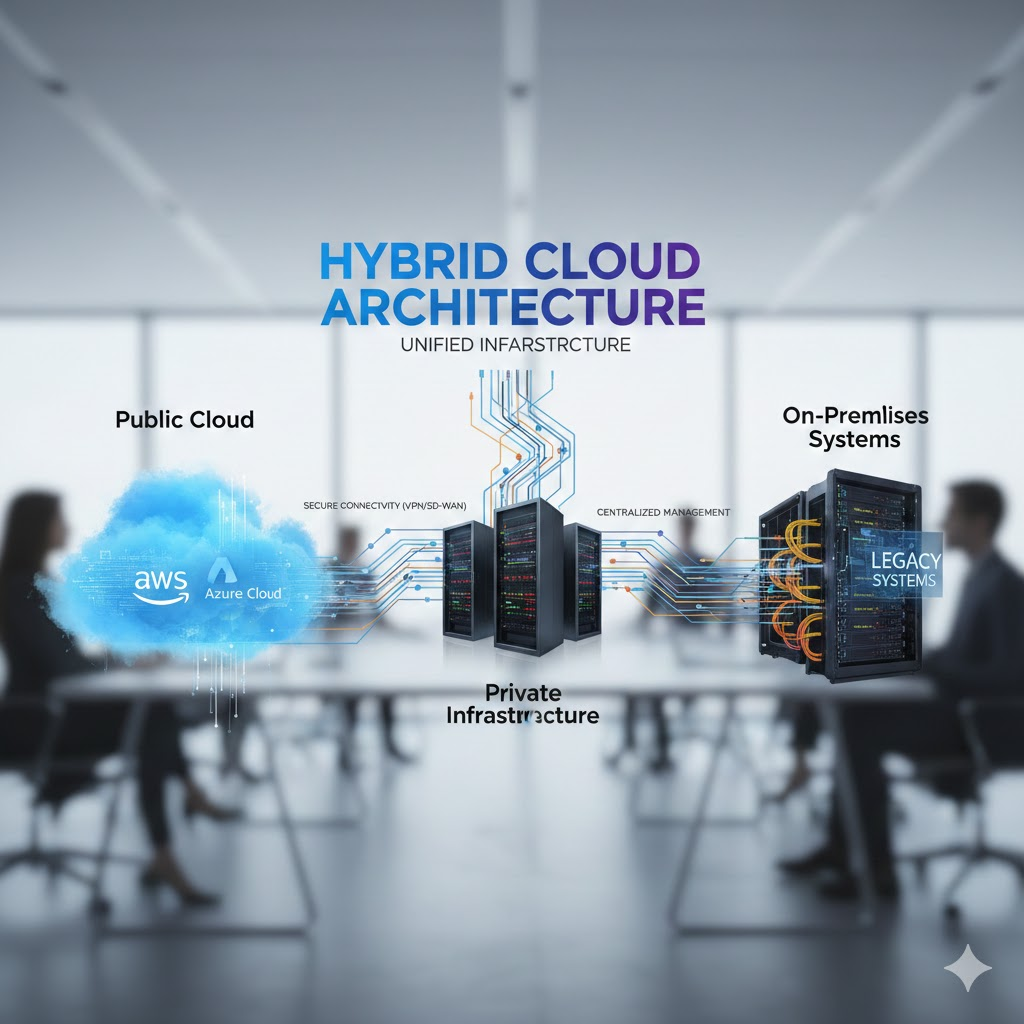
A hybrid cloud strategy is an IT framework that integrates public cloud, private cloud, and on-premises resources into a unified infrastructure. Rather than operating these environments independently, businesses connect them through secure networking, orchestration tools, and centralized management platforms.
This approach enables seamless data movement, workload portability, and optimized resource allocation across multiple environments.
Core Components of a Hybrid Cloud Environment
A successful hybrid cloud strategy typically includes:
- Public cloud platforms (AWS, Azure, Google Cloud)
- Private cloud infrastructure
- On-premises legacy systems
- Secure connectivity solutions (VPN, SD-WAN)
- Centralized monitoring and management tools
By integrating these components, organizations gain flexibility without sacrificing control.
The Key Drivers Behind Hybrid Cloud Adoption
Several critical factors are pushing businesses toward hybrid cloud models.
1. Flexibility and Scalability
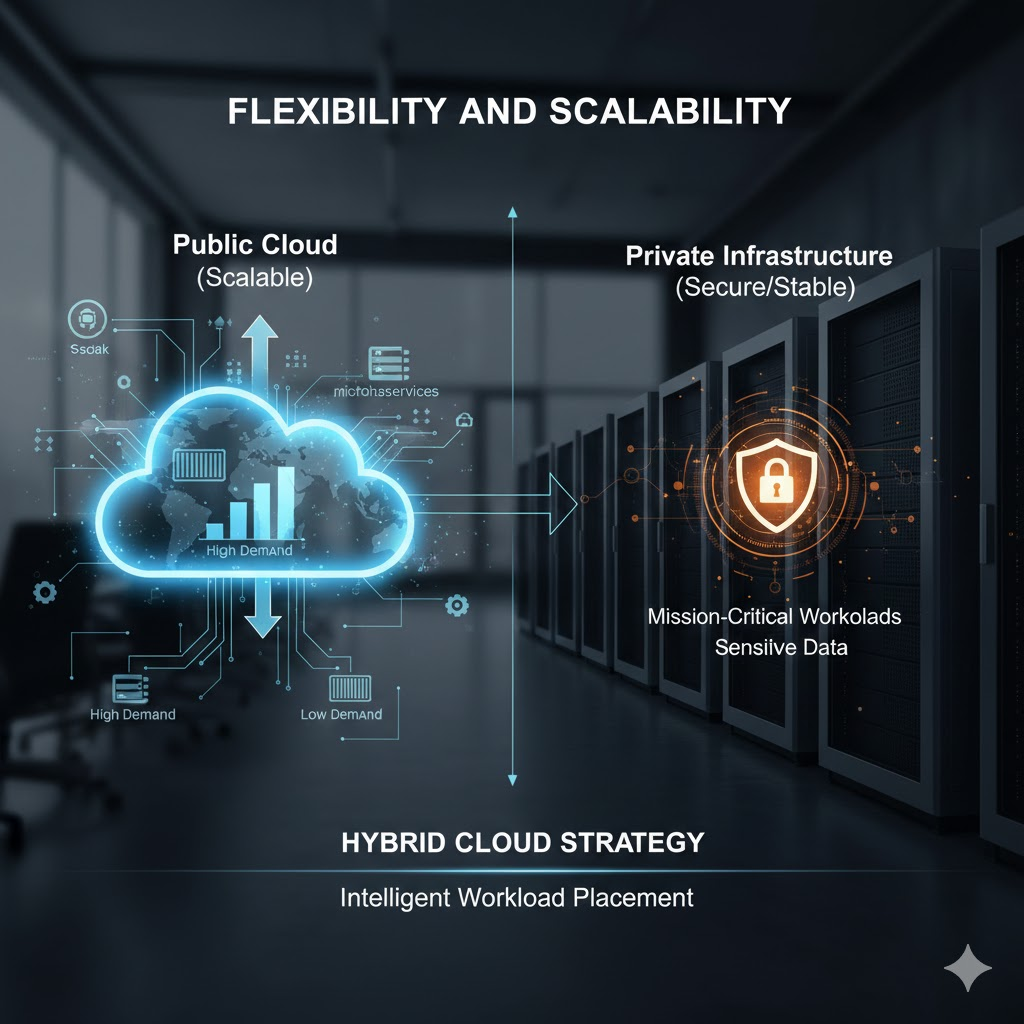
One of the main reasons hybrid cloud is becoming the standard is scalability. Public cloud environments allow businesses to scale resources up or down instantly based on demand. Meanwhile, sensitive or mission-critical workloads can remain in private environments.
This balance ensures:
- Efficient resource utilization
- Reduced downtime
- Improved performance during peak demand
A hybrid cloud strategy provides elasticity without fully relinquishing infrastructure control.
2. Enhanced Security and Compliance
For industries such as healthcare, finance, and government, regulatory compliance is a top priority. Many organizations cannot move all workloads to a public cloud due to strict data privacy regulations.
A hybrid cloud strategy allows companies to:
- Store sensitive data in private environments
- Use public cloud for less sensitive workloads
- Maintain compliance with regional regulations
- Implement Zero Trust security frameworks
This approach reduces risk while enabling innovation.
3. Cost Optimization
Cloud spending continues to grow, and businesses are becoming more strategic about resource allocation. Hybrid cloud environments help organizations optimize costs by placing workloads in the most cost-effective environment.
For example:
- Steady workloads can run on private infrastructure
- Variable workloads can leverage public cloud elasticity
- Disaster recovery systems can operate in the cloud to reduce capital expenses
A well-planned hybrid cloud strategy aligns IT spending with actual business needs. 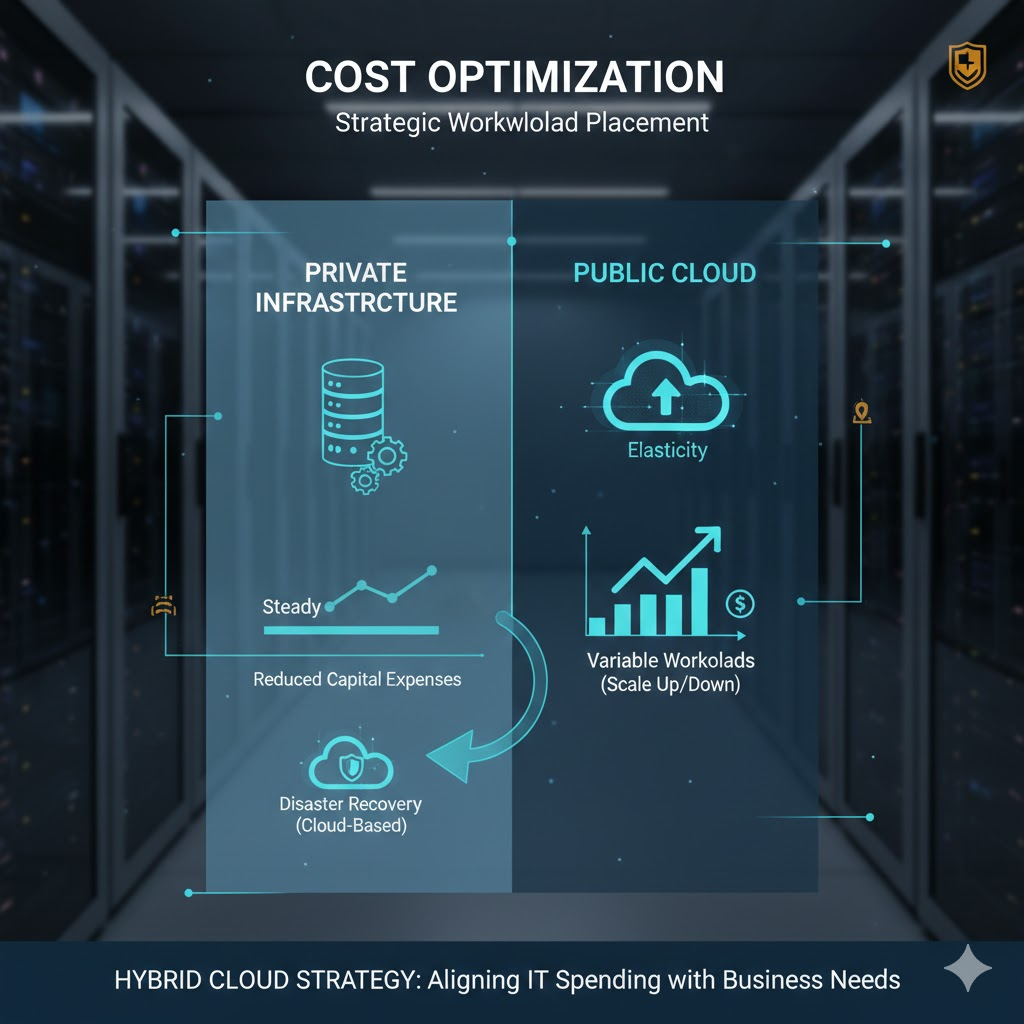
Hybrid Cloud and Digital Transformation
Digital transformation initiatives demand rapid innovation. Hybrid cloud supports modernization efforts by enabling gradual migration instead of disruptive overhauls.
Modernizing Legacy Systems
Many enterprises still rely on legacy applications that are difficult to migrate fully to the public cloud. Hybrid cloud allows organizations to:
- Refactor applications incrementally
- Integrate legacy systems with cloud-native services
- Avoid costly “rip-and-replace” strategies
This makes digital transformation more manageable and less risky.
Supporting Cloud-Native Development
Hybrid environments support containerization and microservices architectures. Developers can build and test applications in the public cloud while maintaining secure data storage in private systems.
This flexibility accelerates innovation and shortens development cycles.
Business Continuity and Disaster Recovery
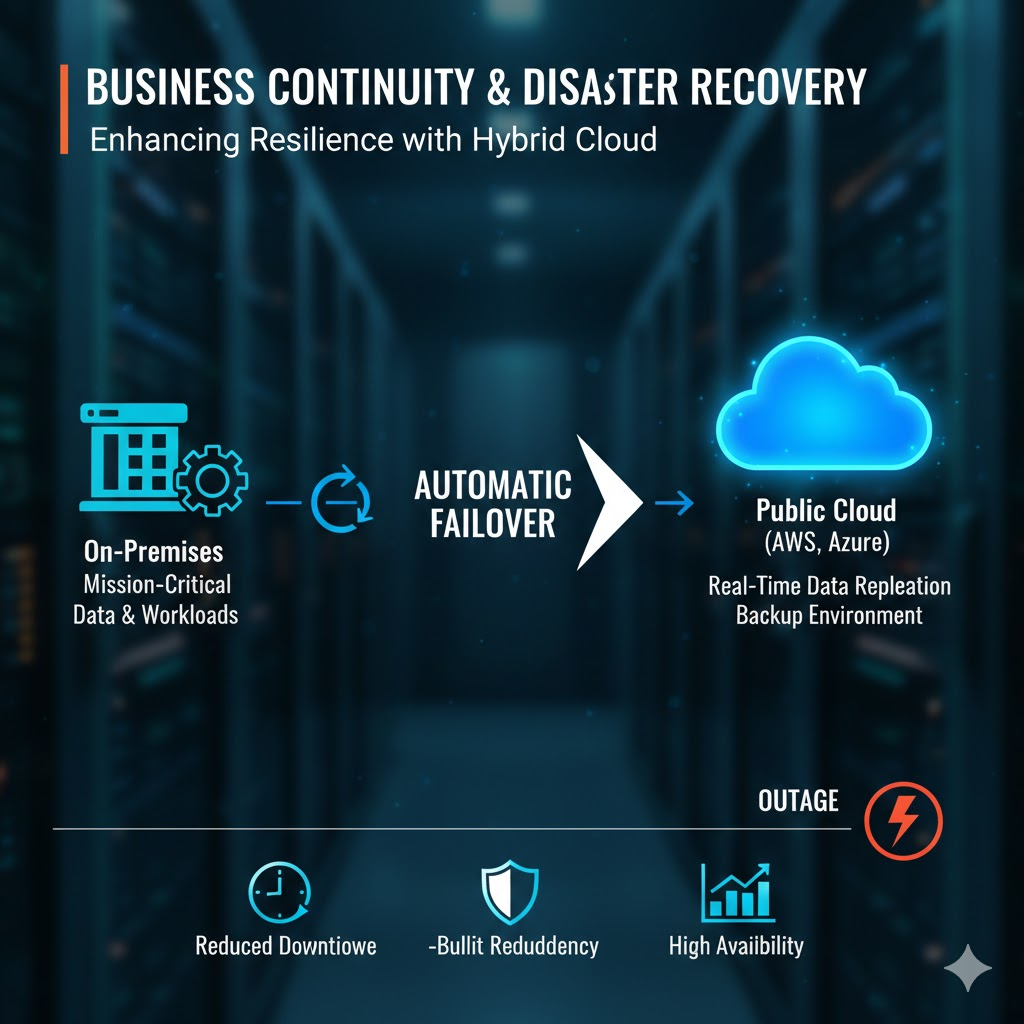
Downtime can cost enterprises millions of dollars per hour. Hybrid cloud enhances resilience by distributing workloads across multiple environments.
Built-In Redundancy
With a hybrid cloud strategy, businesses can:
- Replicate data between public and private clouds
- Maintain backup environments
- Automatically fail over during outages
This redundancy ensures business continuity even during unexpected disruptions.
The Role of Edge Computing in Hybrid Cloud
As IoT and real-time applications expand, edge computing is becoming increasingly important. Hybrid cloud integrates edge nodes with centralized cloud systems to improve performance.
This setup enables:
- Low-latency processing
- Real-time analytics
- Faster customer interactions
By incorporating edge computing into a hybrid cloud strategy, businesses can enhance user experiences and operational efficiency.
Security Advantages of Hybrid Cloud
Security concerns often drive organizations to adopt hybrid models.
Zero Trust Architecture
Hybrid cloud environments are increasingly designed around Zero Trust principles, which require:
- Continuous authentication
- Least-privilege access
- Network segmentation
- Continuous monitoring
This reduces attack surfaces and improves overall security posture.
Centralized Security Management
Modern hybrid cloud management platforms provide unified security dashboards. IT teams can monitor threats, manage compliance, and enforce policies across environments from a single interface.
This centralized control strengthens governance and simplifies audits.
Industry Use Cases for Hybrid Cloud Strategy
Hybrid cloud adoption spans across multiple industries.
Healthcare
- Secure patient data storage
- AI-powered diagnostics in public cloud
- Compliance with HIPAA regulations
Financial Services
- Fraud detection systems in cloud
- Secure transaction processing in private infrastructure
- Regulatory compliance management
Retail and E-commerce
- Scalable cloud resources during peak shopping seasons
- Secure storage of payment data
- Real-time inventory analytics
Each industry tailors its hybrid cloud strategy to its operational requirements and regulatory landscape.
Overcoming Hybrid Cloud Challenges
While hybrid cloud offers significant advantages, it also presents challenges.
Integration Complexity
Connecting multiple environments requires advanced networking and orchestration tools. Without proper planning, systems can become fragmented.
To address this, businesses should:
- Adopt unified cloud management platforms
- Implement standardized APIs
- Use container orchestration tools like Kubernetes
Skills Gap
Managing hybrid environments demands specialized expertise in cloud architecture, cybersecurity, and DevOps.
Organizations must invest in:
- Cloud training programs
- Cross-functional IT teams
- Strategic partnerships with managed service providers
A skilled workforce is essential for executing an effective hybrid cloud strategy.
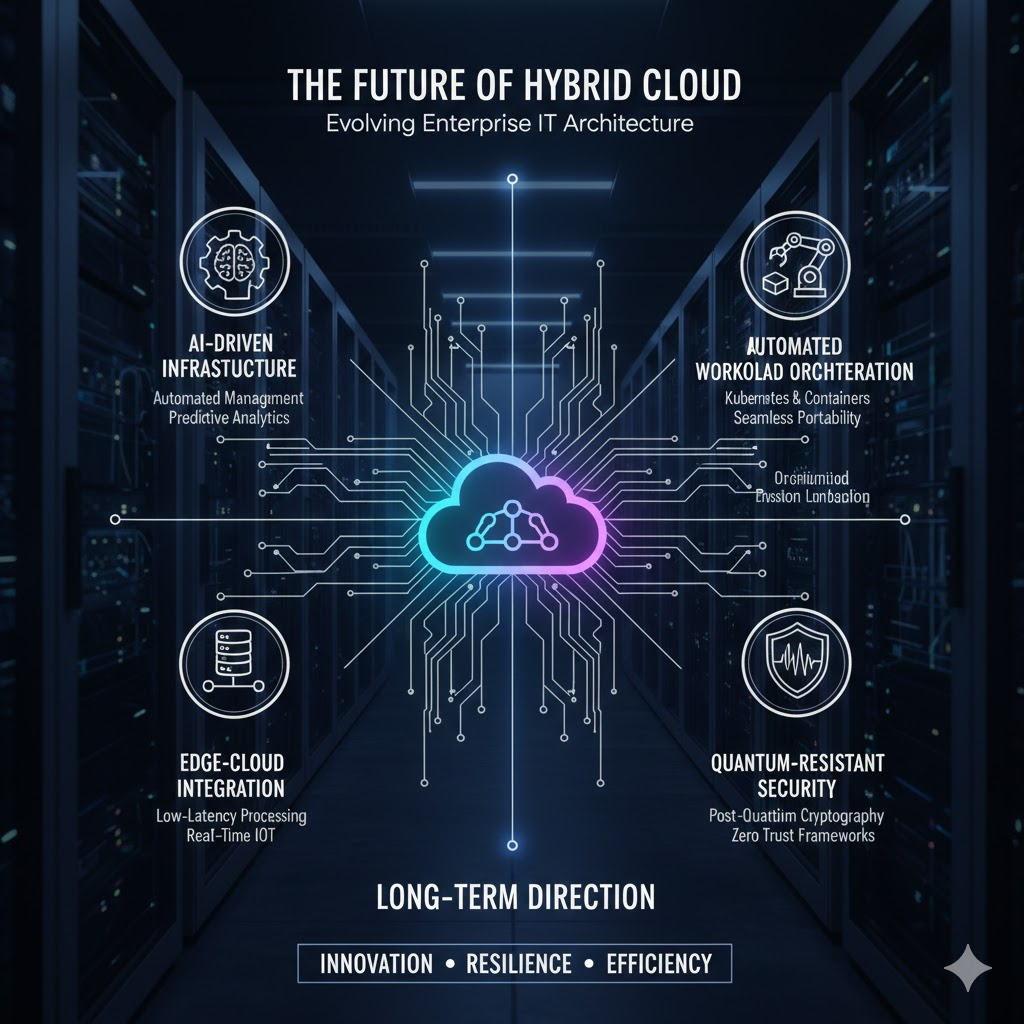
The Future of Hybrid Cloud Strategy
Looking ahead, hybrid cloud will continue to evolve with advancements in:
- AI-driven infrastructure management
- Automated workload orchestration
- Edge-cloud integration
- Quantum-resistant security models
Hybrid cloud is not a temporary trend—it represents the long-term direction of enterprise IT architecture.
As businesses seek agility, resilience, and cost efficiency, hybrid cloud provides the perfect balance between innovation and control.
Conclusion
Hybrid cloud is becoming the standard for modern businesses because it delivers flexibility, security, scalability, and cost optimization in a single integrated framework. A strong hybrid cloud strategy allows organizations to modernize legacy systems, maintain compliance, and support rapid digital transformation without sacrificing control.
Businesses that partner with experienced technology providers gain a strategic advantage in designing and implementing scalable hybrid environments.
FAST TRACT IT SERVICE L.L.C is committed to helping organizations build secure, scalable, and future-ready hybrid cloud strategy solutions that drive long-term success and digital resilience.