





FAST TRACT IT SERVICE L.L.C provides executive-level insight into the true cost of cybersecurity breach incidents and why organizations must treat cyber risk as a core business priority—not just a technical concern.
Cybersecurity breaches are no longer rare events. They are inevitable risks in today’s hyper-connected digital economy. From ransomware attacks and data theft to insider threats and supply chain compromises, businesses of all sizes face growing exposure. While headlines often focus on ransom payments or regulatory fines, the real cost of a cybersecurity breach extends far beyond immediate financial losses.
Understanding the full impact helps leadership teams allocate resources strategically and strengthen long-term resilience.
Direct Financial Costs of a Cybersecurity Breach
The most visible part of the cost of cybersecurity breach incidents involves immediate financial damage.
1. Incident Response and Containment
When a breach occurs, organizations must quickly mobilize:
- Cybersecurity forensic teams
- Legal advisors
- Crisis management consultants
- Public relations specialists
These emergency response efforts often require significant unplanned spending.
2. Ransom Payments and Data Recovery
In ransomware attacks, businesses may face demands for large payments in exchange for decryption keys. Even if organizations refuse to pay, data recovery, system rebuilding, and backup restoration require extensive technical resources.
The operational downtime during recovery can be equally costly.
3. Regulatory Fines and Legal Fees
Governments worldwide enforce strict data protection laws. If sensitive customer or employee information is exposed, regulatory bodies may impose substantial penalties.
Legal costs may include:
- Class-action lawsuits
- Settlement agreements
- Compliance remediation expenses
The cost of cybersecurity breach incidents often multiplies through legal consequences.
Operational Disruption and Downtime
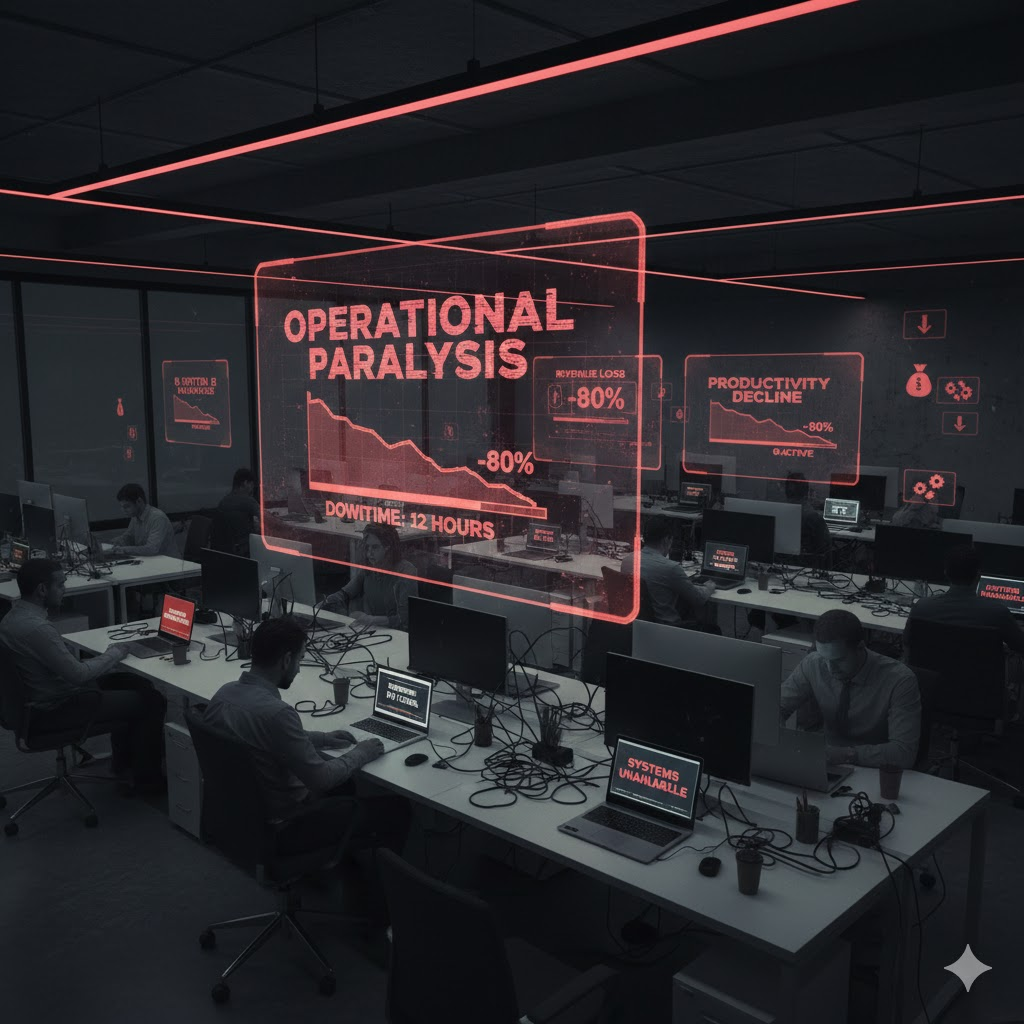
Downtime can be one of the most damaging components of a cyber incident.
Revenue Loss
When systems are unavailable, businesses may experience:
- Interrupted sales
- Suspended transactions
- Halted production lines
- Delayed service delivery
For e-commerce and financial institutions, even a few hours of downtime can result in major revenue losses.
Productivity Decline
Employees may be unable to access essential tools and data during a breach response. Productivity slows dramatically while IT teams focus on recovery efforts.
Operational paralysis increases the total cost of cybersecurity breach incidents.
Reputational Damage and Brand Erosion
Trust is one of the most valuable business assets.
Loss of Customer Confidence
Customers expect organizations to safeguard their personal information. A publicized breach may lead to:
- Customer churn
- Reduced brand loyalty
- Negative media coverage
Rebuilding trust can take years.
Investor and Partner Concerns
Investors often react negatively to cybersecurity incidents. Stock prices may decline following major breaches, especially if response efforts appear inadequate.
Business partners may also reevaluate contracts due to perceived risk.
The reputational cost of cybersecurity breach incidents often exceeds direct financial losses. This reality underscores why data protection is now a board-level concern, requiring governance oversight, compliance alignment, and executive accountability.

Long-Term Financial Impact
Some consequences of a breach unfold gradually.

Increased Cyber Insurance Premiums
After experiencing a breach, companies often face:
- Higher insurance premiums
- Stricter policy conditions
- Reduced coverage limits
Insurers assess breached organizations as higher-risk entities.
Higher Security Investment Requirements
Post-incident, enterprises must invest in:
- Advanced security tools
- Infrastructure upgrades
- Continuous monitoring systems
- Staff training programs
While necessary, these unplanned investments increase overall operational costs.
Regulatory and Compliance Consequences
Modern regulatory frameworks demand transparency and accountability.
Mandatory Disclosure Requirements
Organizations may be legally required to:
- Notify affected individuals
- Report breaches to regulatory authorities
- Publicly disclose security failures
Compliance reporting increases administrative burden and legal exposure.
Audits and Oversight
Following a breach, regulators may impose ongoing audits or monitoring requirements. These extended compliance obligations add to the total cost of cybersecurity breach incidents.
The Human Factor: Internal Impact
Cybersecurity breaches also affect internal culture and morale.
Employee Stress and Turnover
Security incidents can create anxiety among employees concerned about job security or data exposure.
Key IT staff may experience burnout during prolonged recovery periods.
Leadership Accountability
Executives may face:
- Board scrutiny
- Public criticism
- Career consequences
Cyber risk is increasingly tied to executive performance evaluation.

Supply Chain and Third-Party Risk
Modern enterprises depend on external vendors and digital partners.
If a breach exposes shared systems, it can:
- Disrupt supply chains
- Trigger contract penalties
- Damage business relationships
The interconnected nature of digital ecosystems amplifies the cost of cybersecurity breach events.
Hidden Costs Many Businesses Overlook
Some expenses are less visible but equally significant.
Loss of Competitive Advantage
If intellectual property or trade secrets are stolen, competitors may gain unfair advantages.
Customer Acquisition Costs
After a breach, businesses may need to invest heavily in marketing campaigns to rebuild brand image and attract new customers.
Executive and Board Time Diversion
Leadership teams often spend months addressing legal, regulatory, and operational fallout instead of focusing on strategic growth initiatives.
Opportunity costs add to the total financial impact.
Measuring the True Cost of a Cybersecurity Breach
To evaluate impact accurately, organizations should assess:
- Total downtime hours
- Lost revenue per hour
- Legal and regulatory expenses
- Remediation costs
- Customer churn rates
- Insurance adjustments
A comprehensive cost assessment helps guide future risk mitigation investments.
Reducing the Cost of Cybersecurity Breach Incidents
Prevention and preparedness significantly reduce potential losses.
Implementing Zero Trust Security
Zero Trust frameworks minimize unauthorized access and limit lateral movement during breaches. As detailed in our executive guide to Zero Trust security implementation, this model reduces the blast radius of attacks by continuously verifying identities and enforcing strict access controls across the enterprise.
Strengthening Backup and Disaster Recovery
Regular, immutable backups reduce ransomware impact and accelerate recovery.
Continuous Monitoring and Threat Detection
Advanced threat detection systems identify suspicious activity before damage escalates.
Employee Training Programs
Human error remains a leading cause of breaches. Ongoing cybersecurity awareness training reduces phishing and credential misuse risks.
Cybersecurity as a Strategic Investment
Executives must view cybersecurity spending not as a cost center but as risk management and value protection.
Investing proactively in cybersecurity:
- Reduces operational risk
- Protects brand reputation
- Ensures regulatory compliance
- Strengthens stakeholder confidence
A strong security posture minimizes the long-term cost of cybersecurity breach events.
The Growing Executive Responsibility
Boards increasingly demand regular cybersecurity reporting.
Leaders must:
- Evaluate enterprise-wide risk exposure
- Allocate sufficient cybersecurity budgets
- Ensure incident response readiness
- Integrate cyber risk into overall business strategy
Cybersecurity resilience is directly tied to corporate valuation and long-term sustainability.
Conclusion
The true cost of cybersecurity breach incidents extends far beyond ransom payments and regulatory fines. From operational disruption and reputational damage to long-term financial consequences and leadership accountability, the impact can be profound and lasting.
Organizations that underestimate cyber risk often pay the highest price.
By adopting proactive security frameworks, strengthening monitoring capabilities, and aligning cybersecurity strategy with executive governance, businesses can significantly reduce exposure.
Cybersecurity is no longer optional—it is a business survival imperative.
FAST TRACT IT SERVICE L.L.C helps enterprises minimize the cost of cybersecurity breach risks through advanced protection strategies, proactive monitoring solutions, and resilient infrastructure frameworks designed to safeguard business continuity and long-term success.