




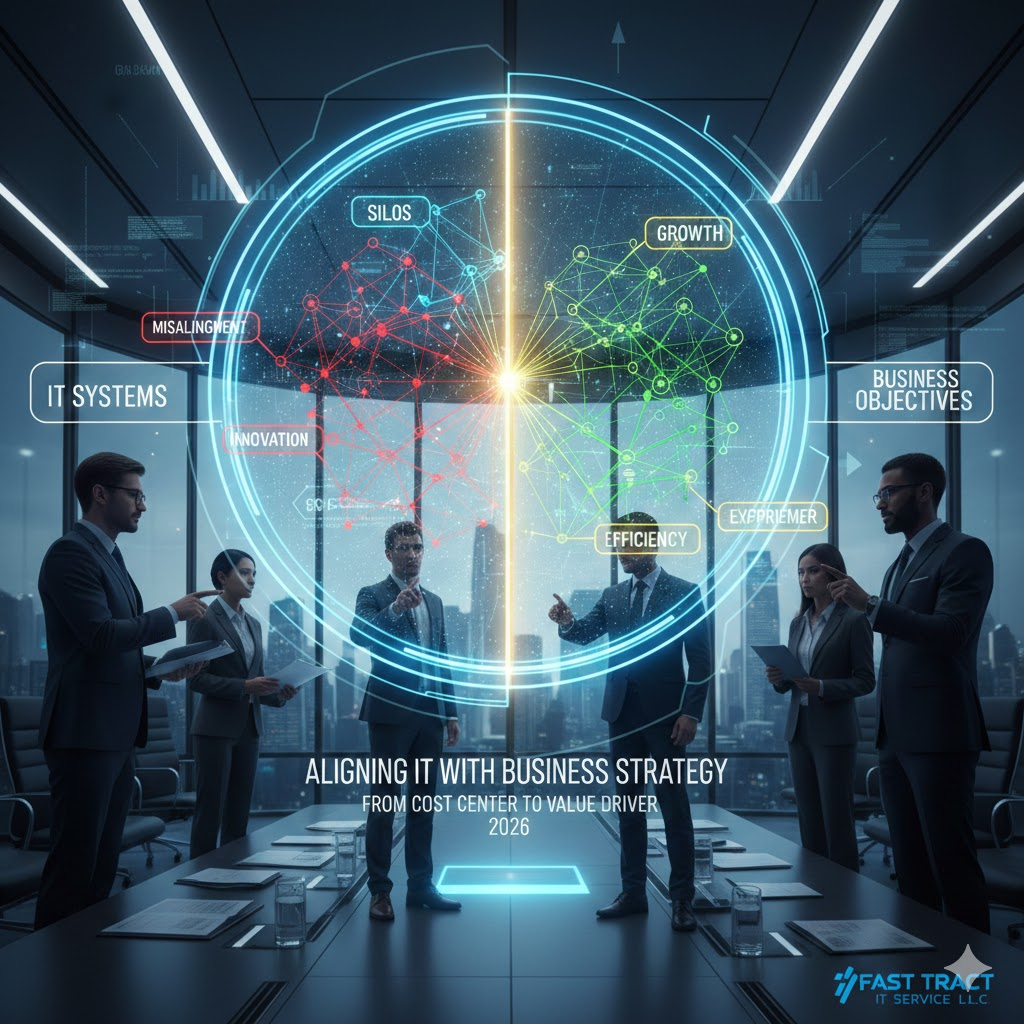
FAST TRACT IT SERVICE L.L.C delivers strategic insight into the importance of aligning IT with business strategy to ensure technology investments directly support growth, innovation, and long-term competitive advantage.
In 2026, technology is no longer a support function—it is a core driver of enterprise value. Organizations invest heavily in cloud platforms, cybersecurity tools, AI systems, automation software, and digital transformation initiatives. However, without clear alignment between IT spending and business objectives, these investments may fail to deliver measurable returns.
Successfully aligning IT with business strategy ensures that every technology initiative contributes to revenue growth, operational efficiency, customer experience, and risk management. This alignment is a core component of building an effective IT strategy for businesses in 2026 and beyond.
Why Aligning IT with Business Strategy Matters
When IT and business teams operate in silos, misalignment occurs.
The Cost of Disconnected IT Investment
Common consequences include:
- Technology solutions that do not solve real business problems
- Budget overruns without measurable ROI
- Redundant systems across departments
- Delayed digital transformation initiatives
Aligning IT with business strategy eliminates these inefficiencies and promotes shared accountability.
Establishing Executive Collaboration
True alignment begins at the leadership level.
IT as a Strategic Partner
CIOs and IT leaders must work closely with:
- CEOs to support strategic direction
- CFOs to manage financial planning
- COOs to enhance operational performance
- CMOs to improve digital customer engagement
Cross-functional collaboration ensures IT investments reflect executive priorities.

Connecting Technology Roadmaps to Business Goals
An effective alignment strategy begins with clearly defined objectives.
Linking IT Projects to Measurable Outcomes
Each initiative should answer:
- How does this investment increase revenue?
- Does it reduce operational costs?
- Does it improve customer satisfaction?
- Does it mitigate business risk?
When aligning IT with business strategy, measurable outcomes must guide decision-making.

Cloud Strategy and Financial Governance
Cloud adoption is central to modern IT investment planning.
Avoiding Uncontrolled Cloud Spending
Without governance, cloud environments can create unexpected costs.
Organizations should implement:
- FinOps practices
- Cost monitoring dashboards
- Resource optimization policies
- Predictable budgeting frameworks
Aligning IT with business strategy ensures cloud spending aligns with growth objectives.
Cybersecurity as a Business Enabler
Cyber risk is now a board-level concern.
Integrating Security into Strategic Planning
Cybersecurity investments should support:
- Regulatory compliance
- Brand reputation protection
- Operational continuity
- Stakeholder confidence
Rather than being viewed as a cost center, cybersecurity becomes a strategic safeguard.
Data-Driven Decision-Making
Modern enterprises depend on accurate, accessible data.
Investing in Data Infrastructure
When aligning IT with business strategy, organizations must prioritize:
- Unified data platforms
- Advanced analytics capabilities
- Secure data governance frameworks
- AI-ready infrastructure
Data-driven insights improve executive decisions and competitive positioning.
Measuring ROI on IT Investments
Financial transparency strengthens alignment.
Key Performance Indicators (KPIs)
Organizations should track:
- Cost savings from automation
- Revenue growth linked to digital initiatives
- Reduction in downtime
- Improved productivity metrics
- Security incident reduction rates
Regular reporting reinforces accountability.
Supporting Digital Transformation
Digital transformation initiatives must directly contribute to business growth.
Strategic Technology Adoption
Before implementing new solutions, leadership should evaluate:
- Alignment with corporate objectives
- Integration with existing systems
- Long-term scalability
- Risk exposure
Careful evaluation prevents fragmented technology ecosystems.
Workforce Enablement and Productivity
Technology investments should empower employees.
Enhancing Collaboration and Efficiency
Examples include:
- Cloud-based collaboration tools
- Automated workflow systems
- Secure remote access solutions
- Modern IT service management platforms
When aligning IT with business strategy, workforce productivity becomes a measurable outcome.
Risk Management and Resilience Planning
Operational stability is essential for sustainable growth.
Investing in Business Continuity
Aligned IT investment supports:
- Disaster recovery planning
- Redundant infrastructure
- Continuous monitoring systems
- Incident response readiness
Resilience reduces financial and reputational risk.
Governance and Compliance Integration
Regulatory requirements are expanding globally.
Embedding Compliance into IT Planning
An aligned approach ensures:
- Continuous compliance monitoring
- Automated reporting
- Audit-ready documentation
- Risk mitigation frameworks
Governance strengthens investor and stakeholder confidence.
Common Barriers to IT and Business Alignment
Despite best intentions, organizations face challenges.
Siloed Communication
Limited collaboration between IT and business units weakens strategic cohesion.
Short-Term Budget Pressures
Cutting critical IT investments to meet immediate financial goals can undermine long-term growth.
Lack of Clear Metrics
Without performance tracking, alignment becomes difficult to measure.
Building a Long-Term IT Investment Roadmap
Sustainable alignment requires structured planning.
Developing a Strategic Framework
Organizations should:
- Conduct a comprehensive technology maturity assessment to evaluate current capabilities and identify strategic gaps
- Define multi-year digital roadmaps
- Review investment performance regularly
- Adjust strategies as market conditions evolve
Continuous improvement ensures ongoing alignment.
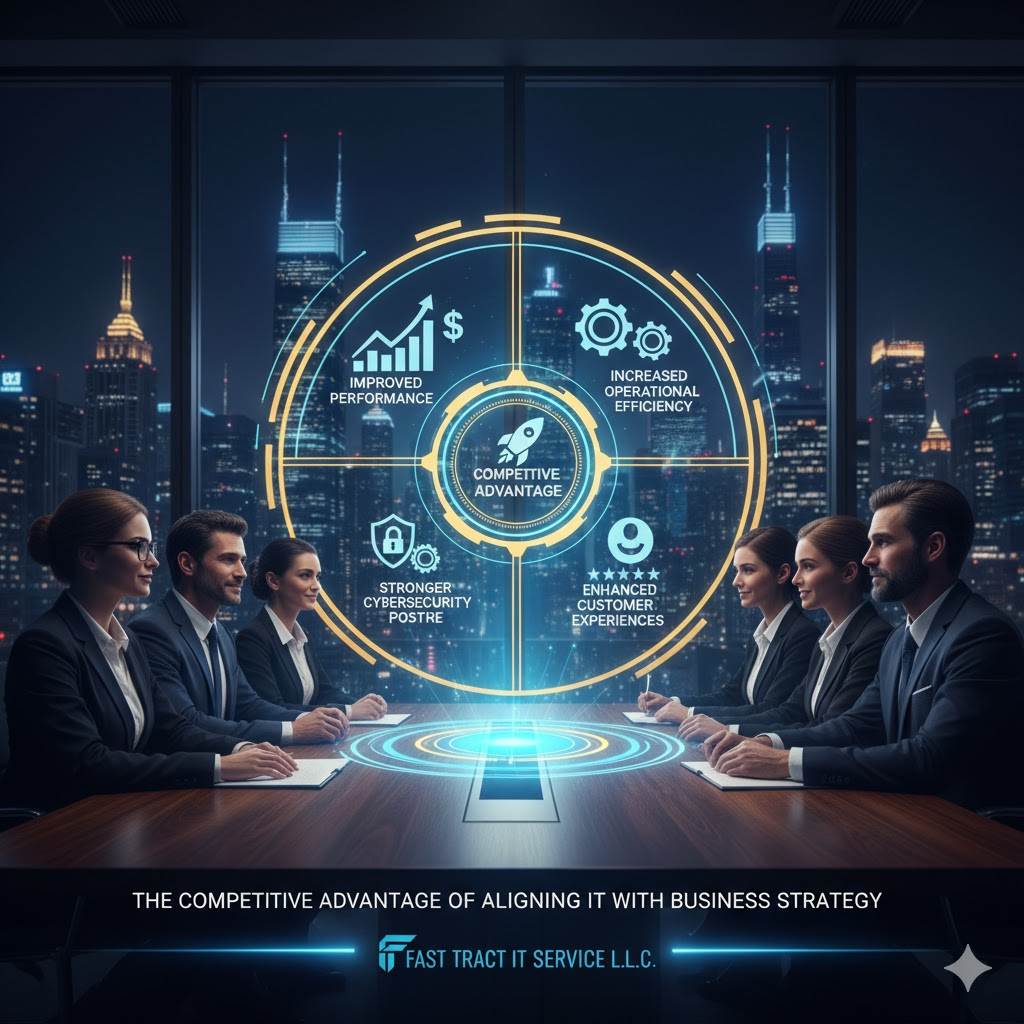
The Competitive Advantage of Alignment
Organizations that succeed in aligning IT with business strategy gain:
- Faster innovation cycles
- Improved financial performance
- Stronger cybersecurity posture
- Enhanced customer experiences
- Increased operational efficiency
Technology becomes a growth engine rather than an operational expense.
The Future of IT Investment Strategy
In the coming years, alignment will become even more critical as organizations adopt:
- AI-driven automation
- Autonomous IT operations
- Advanced cybersecurity frameworks
- Hyper-distributed cloud architectures
Enterprises that proactively integrate IT planning into executive strategy will maintain long-term competitiveness.
Conclusion
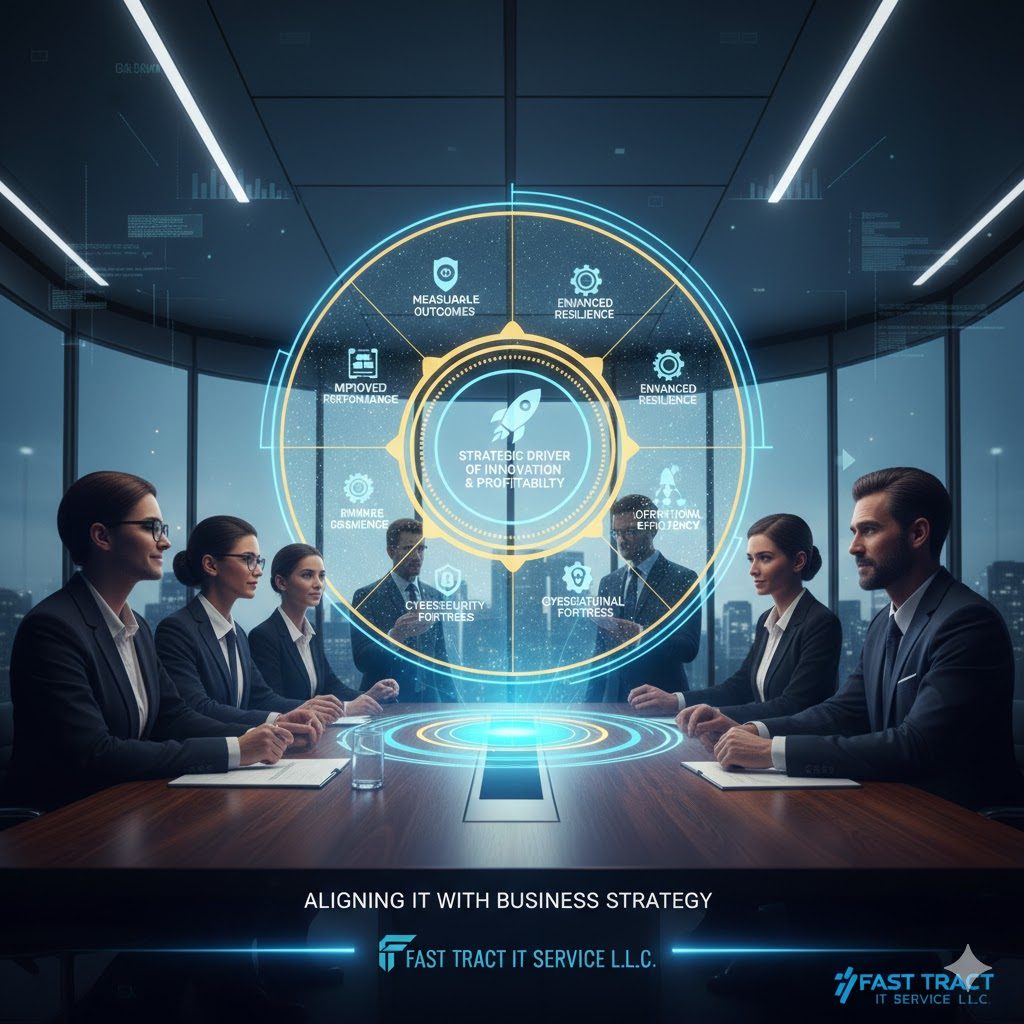
Aligning IT investment with business objectives is essential for sustainable growth in 2026 and beyond. Technology decisions must support measurable outcomes, strengthen resilience, enhance security, and improve operational efficiency.
By fostering executive collaboration, implementing financial governance, and linking IT initiatives to strategic goals, organizations can maximize the return on technology investments.
Aligning IT with business strategy transforms technology from a cost center into a strategic driver of innovation and profitability.
FAST TRACT IT SERVICE L.L.C partners with enterprises to design and execute strategic IT investment plans that ensure aligning IT with business strategy, delivering scalable, secure, and future-ready digital transformation outcomes.