





FAST TRACT IT SERVICE L.L.C explores how a well-defined digital transformation strategy is redefining competitive advantage, enabling organizations to innovate faster, operate smarter, and lead in increasingly dynamic markets.
In 2026, digital transformation is no longer a trend—it is a strategic necessity. Businesses across industries are leveraging cloud computing, artificial intelligence, automation, advanced analytics, and cybersecurity frameworks to stay relevant. Companies that fail to modernize risk losing market share to agile, technology-driven competitors.
A strong digital transformation strategy does more than upgrade systems. It reshapes how organizations create value, serve customers, manage risk, and scale operations. At its core, transformation success depends on building an effective IT strategy aligned with executive objectives.
Understanding Digital Transformation Strategy
A digital transformation strategy is a structured roadmap that integrates digital technologies into every aspect of an organization’s operations and customer engagement.
Core Objectives
An effective digital transformation strategy focuses on:
- Enhancing customer experience
- Increasing operational efficiency
- Enabling data-driven decision-making
- Strengthening cybersecurity resilience
- Accelerating innovation
Transformation is not just about technology—it is about reimagining business models.
Speed as a Competitive Differentiator
In fast-moving markets, speed matters.
Faster Product Development
Modern digital infrastructure allows organizations to:
- Deploy applications using cloud-native platforms
- Automate testing and integration
- Scale services instantly
- Adapt quickly to customer feedback
A strong digital transformation strategy reduces time-to-market and enhances agility.
Data-Driven Decision-Making
Data is now one of the most powerful strategic assets.
Turning Data into Insight
Organizations leveraging digital tools can:
- Analyze customer behavior in real time
- Predict market trends
- Optimize supply chains
- Personalize services
A data-centric digital transformation strategy creates smarter decision-making frameworks and improves competitive positioning.
Customer Experience as a Growth Engine
Customer expectations continue to rise.
Personalized Digital Engagement
Through AI and analytics, businesses can deliver:
- Personalized recommendations
- Omnichannel communication
- Secure digital transactions
- Real-time service support
Enhanced customer experience drives loyalty and long-term revenue growth.

Operational Efficiency Through Automation
Automation is transforming internal processes.
Reducing Manual Workflows
Organizations implementing digital transformation can:
- Automate repetitive tasks
- Improve accuracy
- Reduce operational costs
- Increase productivity
A streamlined operational model strengthens overall profitability.

Cloud and Infrastructure Scalability
Scalable infrastructure supports sustainable expansion.
Hybrid and Multi-Cloud Strategies
A modern digital transformation strategy includes:
- Flexible cloud environments
- Secure remote access capabilities
- Resilient infrastructure architecture
- Cost optimization frameworks
Cloud adoption enables rapid scaling without significant capital investment.

Cybersecurity as a Competitive Advantage
Security is no longer just risk mitigation—it is a trust builder.
Protecting Digital Assets
Strong cybersecurity frameworks:
- Prevent data breaches
- Ensure regulatory compliance
- Safeguard customer information
- Strengthen brand credibility
Organizations with mature digital transformation strategies embed security into every layer of infrastructure.

Innovation and Emerging Technologies
Emerging technologies are redefining industry standards.
AI, IoT, and Advanced Analytics
Forward-thinking organizations integrate:
- Artificial intelligence for predictive insights
- Internet of Things (IoT) for operational visibility
- Machine learning for customer personalization
- Automation for real-time optimization
A proactive digital transformation strategy enables companies to leverage emerging innovations ahead of competitors.
Talent and Cultural Transformation
Technology alone cannot reshape competitive advantage.
Building a Digital-First Culture
Successful digital transformation requires:
- Executive sponsorship
- Cross-department collaboration
- Continuous workforce upskilling
- Agile project management
Cultural alignment ensures sustainable innovation.
Risk Management and Governance
Digital expansion introduces complexity.
Managing Digital Risk
A mature digital transformation strategy incorporates:
- Digital risk management frameworks
- Compliance monitoring systems
- Third-party risk assessments
- Continuous security audits
Governance protects growth initiatives from operational disruption. Implementing a structured digital risk management framework ensures that innovation and expansion occur within a secure, compliant, and resilient operating model.
Measuring Competitive Impact
Organizations must evaluate the success of digital transformation initiatives.
Key Performance Indicators (KPIs)
Metrics may include:
- Revenue growth linked to digital channels
- Customer satisfaction improvements
- Cost reductions through automation
- Decreased downtime
- Faster innovation cycles
Data-driven measurement validates transformation success.
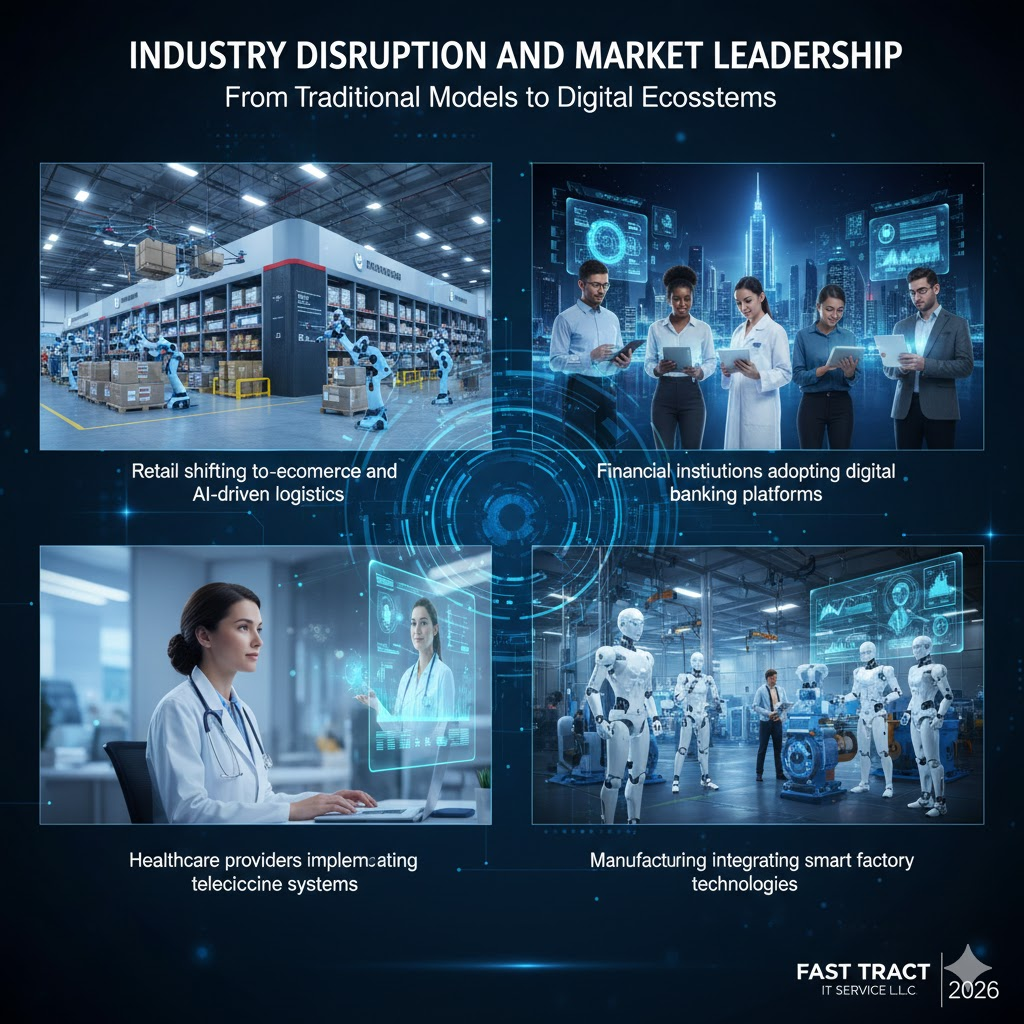
Industry Disruption and Market Leadership
Digital transformation reshapes entire industries.
From Traditional Models to Digital Ecosystems
Examples include:
- Retail shifting to e-commerce and AI-driven logistics
- Financial institutions adopting digital banking platforms
- Healthcare providers implementing telemedicine systems
- Manufacturing integrating smart factory technologies
Companies that embrace digital transformation strategy lead industry evolution rather than react to it.
Common Challenges in Digital Transformation
Despite its benefits, transformation can face obstacles.
Resistance to Change
Employees and leadership may hesitate to adopt new technologies.
Fragmented Implementation
Disjointed systems create inefficiencies and limit scalability.
Lack of Clear Strategy
Without a documented digital transformation strategy, initiatives may lack focus and measurable outcomes.
The Future of Competitive Advantage
As technology continues evolving, competitive advantage will increasingly depend on digital maturity.
Future-focused organizations will prioritize:
- AI-native infrastructure
- Autonomous IT operations
- Predictive cybersecurity
- Real-time analytics ecosystems
- Sustainable digital growth models
Companies that treat digital transformation as a long-term strategy—not a short-term project—will maintain market leadership.
Conclusion
Digital transformation is reshaping competitive advantage by redefining how organizations innovate, operate, and engage customers. A comprehensive digital transformation strategy integrates cloud scalability, data analytics, cybersecurity resilience, automation, and cultural alignment into a unified roadmap.
Businesses that embrace digital modernization gain speed, agility, efficiency, and stronger customer relationships. Those that delay risk losing relevance in increasingly competitive markets.
Sustainable competitive advantage now depends on digital capability.
FAST TRACT IT SERVICE L.L.C partners with enterprises to design and implement strategic digital transformation strategy frameworks that drive innovation, enhance resilience, and deliver long-term competitive growth in today’s rapidly evolving digital economy.