




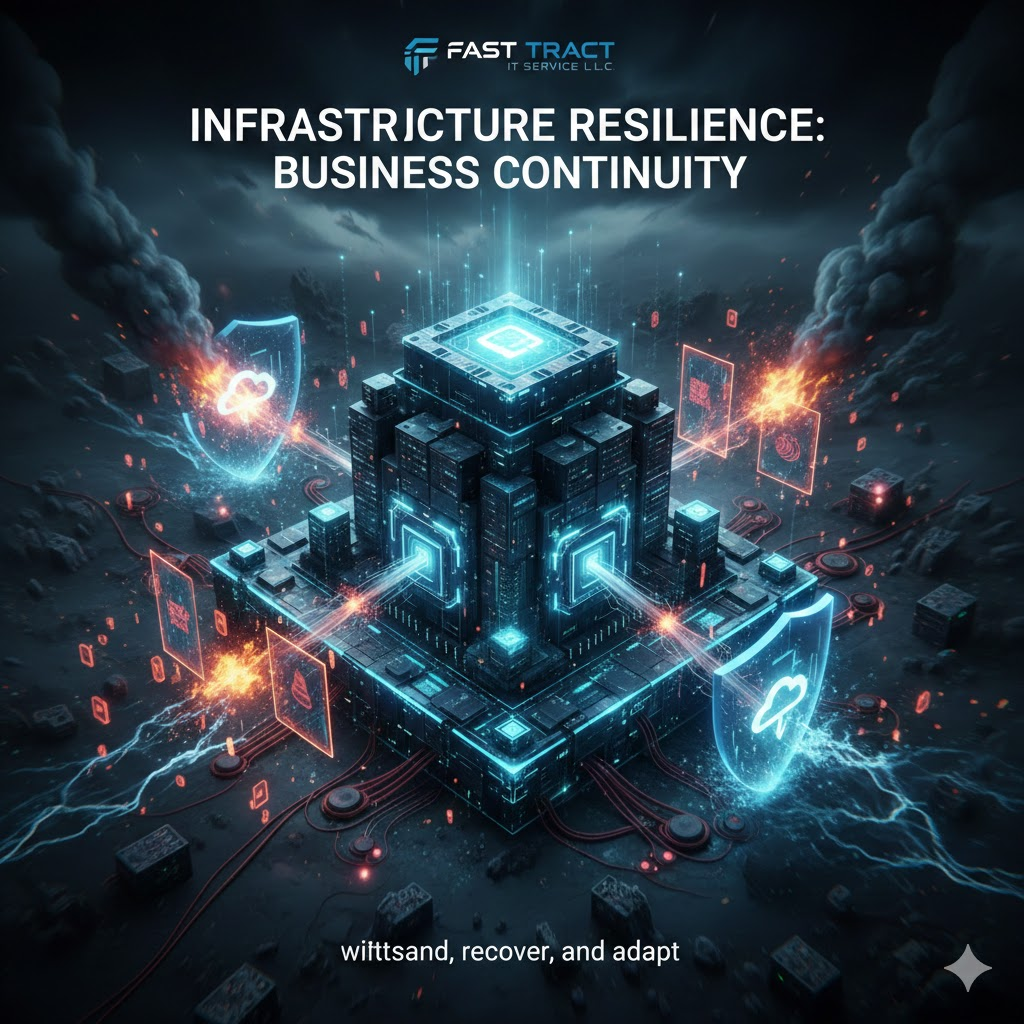
FAST TRACT IT SERVICE L.L.C shares expert insights on why infrastructure resilience for enterprises is a critical pillar of long-term business continuity, operational stability, and competitive advantage in today’s digital economy.
In an era where downtime can cost organizations thousands—or even millions—of dollars per hour, infrastructure resilience is no longer optional. Enterprises depend on digital systems to manage operations, serve customers, process transactions, and store sensitive data. Any disruption—whether caused by cyberattacks, natural disasters, system failures, or human error—can significantly impact revenue, reputation, and compliance standing.
Understanding how infrastructure resilience for enterprises directly affects business continuity helps leadership teams make smarter technology investments and reduce operational risk.
What Is Infrastructure Resilience?
Infrastructure resilience refers to the ability of IT systems, networks, and platforms to withstand, recover from, and adapt to disruptions while maintaining essential operations.
A resilient infrastructure is designed to:
- Prevent failures whenever possible
- Detect issues early
- Minimize downtime
- Recover rapidly
- Adapt to evolving threats
For modern organizations, infrastructure resilience for enterprises is tightly connected to digital transformation, cybersecurity strategy, and operational sustainability.
The Direct Link Between Infrastructure and Business Continuity
Business continuity ensures that critical operations continue during and after a disruption. Without resilient infrastructure, continuity plans cannot succeed.
The Cost of Downtime
Unplanned downtime can result in:
- Lost revenue
- Decreased customer trust
- Contract penalties
- Regulatory violations
- Operational chaos
In highly competitive industries, even a short outage can damage brand credibility.
Infrastructure resilience for enterprises reduces the likelihood and severity of these disruptions.
Key Components of Infrastructure Resilience
A strong resilience strategy involves multiple layers of protection and redundancy.

1. Redundancy and High Availability
Redundancy eliminates single points of failure. Enterprises achieve this through:
- Backup servers
- Load balancing systems
- Multi-region deployments
- Failover clustering
High availability ensures that if one component fails, another takes over automatically.
2. Disaster Recovery Planning
Disaster recovery (DR) is a core element of infrastructure resilience for enterprises.
A comprehensive DR plan includes:
- Defined Recovery Time Objectives (RTO)
- Defined Recovery Point Objectives (RPO)
- Regular data backups
- Automated recovery procedures
- Periodic testing and validation
Without testing, recovery plans often fail during real emergencies.
3. Cybersecurity Integration
Cyber threats are one of the leading causes of infrastructure disruption.
Resilient enterprises implement:
- Zero Trust architecture
- Multi-factor authentication
- Endpoint detection and response
- Continuous monitoring
- Threat intelligence systems
Cybersecurity must be embedded into infrastructure design rather than treated as an afterthought.
Infrastructure Resilience in Cloud and Hybrid Environments
As enterprises adopt cloud and hybrid architectures, resilience strategies must evolve.
Multi-Cloud and Geographic Distribution
Distributing workloads across multiple regions or providers reduces dependency on a single environment. If one data center experiences an outage, services can continue elsewhere.
This geographic diversity strengthens infrastructure resilience for enterprises operating globally.

Automated Scaling and Self-Healing Systems
Modern cloud platforms offer automated resilience features such as:
- Auto-scaling during traffic spikes
- Automatic instance replacement
- Intelligent load distribution
These capabilities improve system reliability without requiring constant manual oversight.
The Role of Network Resilience
Network reliability is essential for maintaining continuous access to applications and data.
Redundant Connectivity
Enterprises can improve network resilience by implementing:
- Multiple internet service providers (ISPs)
- SD-WAN solutions
- Backup communication links
This reduces the risk of complete connectivity failure.
Monitoring and Predictive Maintenance
Advanced monitoring tools use AI-driven analytics to detect anomalies before they escalate into outages.
Predictive maintenance enables IT teams to:
- Identify hardware degradation
- Detect abnormal traffic patterns
- Prevent cascading failures
Proactive monitoring strengthens infrastructure resilience for enterprises.
Human Factors and Operational Resilience
Technology alone does not guarantee resilience. Processes and people play a critical role.
Incident Response Planning
Every enterprise should have a documented incident response plan outlining:
- Roles and responsibilities
- Communication protocols
- Escalation procedures
- Post-incident analysis
Clear coordination reduces recovery time and minimizes confusion.
Training and Simulation Exercises
Regular testing through:
- Tabletop exercises
- Cyberattack simulations
- Disaster recovery drills
Ensures teams are prepared for real-world disruptions.
Prepared teams recover faster and reduce operational losses.

Compliance and Regulatory Considerations
Many industries require strict uptime and data protection standards.
Infrastructure resilience for enterprises supports compliance with:
- Financial regulations
- Healthcare data laws
- Data sovereignty requirements
- Industry-specific security standards
Failing to maintain system reliability can result in fines and legal consequences.
Measuring Infrastructure Resilience
To improve resilience, enterprises must track performance metrics.
Key indicators include:
- System uptime percentage
- Mean Time to Detect (MTTD)
- Mean Time to Recover (MTTR)
- Frequency of incidents
- Backup success rates
Continuous evaluation enables ongoing improvement.
The Competitive Advantage of Resilient Infrastructure
Resilience is not just about avoiding losses—it creates opportunity.
Enterprises with strong infrastructure resilience can:
- Maintain customer trust during disruptions
- Enter new markets confidently
- Support rapid innovation
- Handle unexpected growth
Resilient organizations recover faster and adapt more effectively than competitors.
Common Mistakes That Undermine Resilience
Despite good intentions, many organizations make critical errors.
Overlooking Legacy Systems
Outdated systems often lack redundancy and modern security features. Ignoring legacy infrastructure weakens overall resilience.
Infrequent Testing
A recovery plan that is never tested may fail when needed most.
Fragmented Security Strategies
Disjointed security tools create blind spots. Integrated security frameworks are essential for true infrastructure resilience for enterprises.
Building a Future-Ready Resilience Strategy
To strengthen infrastructure resilience, enterprises should:
- Adopt hybrid or multi-cloud architectures
- Implement automated monitoring systems
- Regularly test disaster recovery plans
- Invest in cybersecurity infrastructure
- Align resilience planning with executive leadership
Resilience must be treated as a strategic priority, not just a technical task.
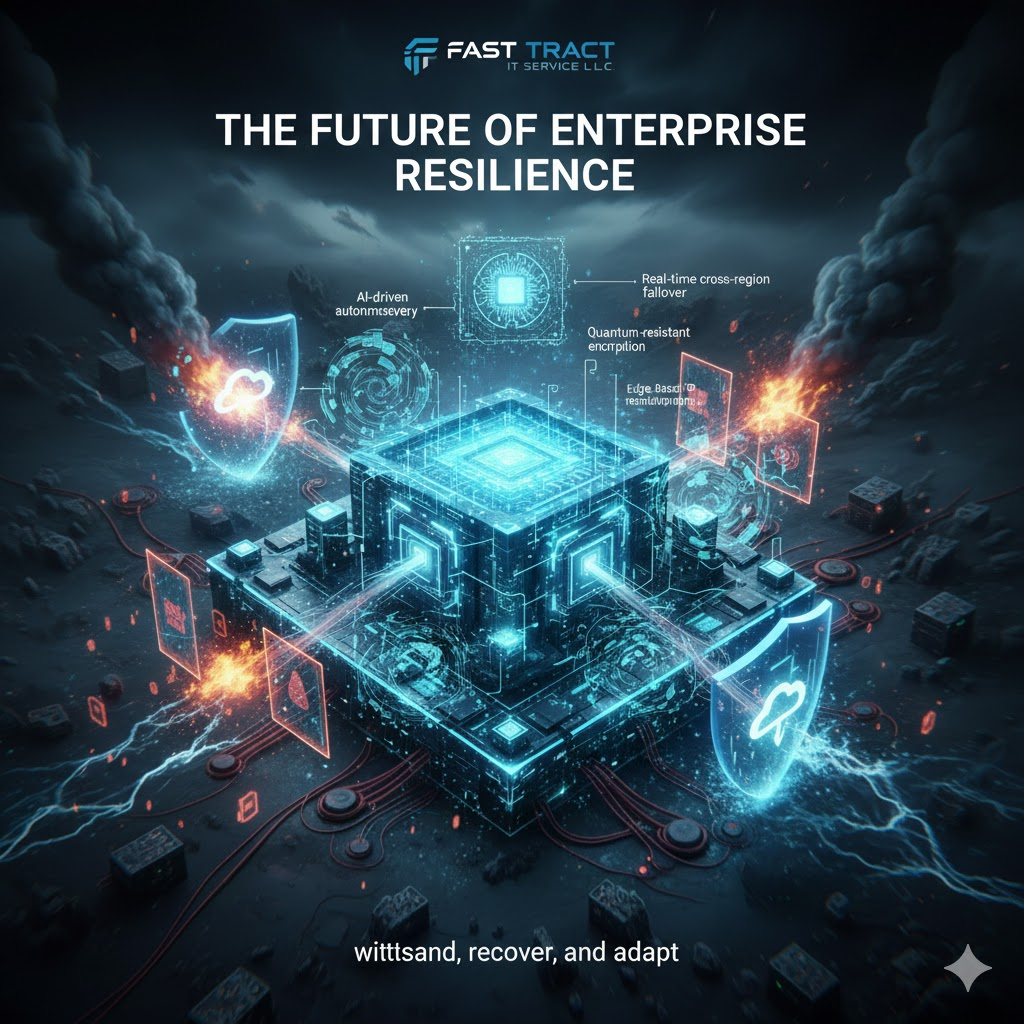
The Future of Infrastructure Resilience for Enterprises
Emerging technologies are redefining resilience capabilities.
Future advancements include:
- AI-driven autonomous recovery
- Quantum-resistant encryption
- Real-time cross-region failover
- Edge-based redundancy systems
As digital ecosystems grow more complex, resilience strategies will continue evolving.
Organizations that prioritize infrastructure resilience for enterprises today will be better prepared for tomorrow’s uncertainties.
Conclusion
Infrastructure resilience is the foundation of business continuity. Without it, even the most innovative enterprises remain vulnerable to disruptions that can halt operations and damage reputation.
By investing in redundancy, cybersecurity integration, disaster recovery planning, and proactive monitoring, enterprises can safeguard critical systems and maintain operational stability during crises.
Resilient infrastructure does more than prevent downtime—it builds trust, strengthens competitive positioning, and ensures long-term sustainability.
FAST TRACT IT SERVICE L.L.C helps organizations design and implement advanced infrastructure resilience for enterprises, ensuring secure, scalable, and future-ready systems that protect business continuity in an increasingly unpredictable digital world.