




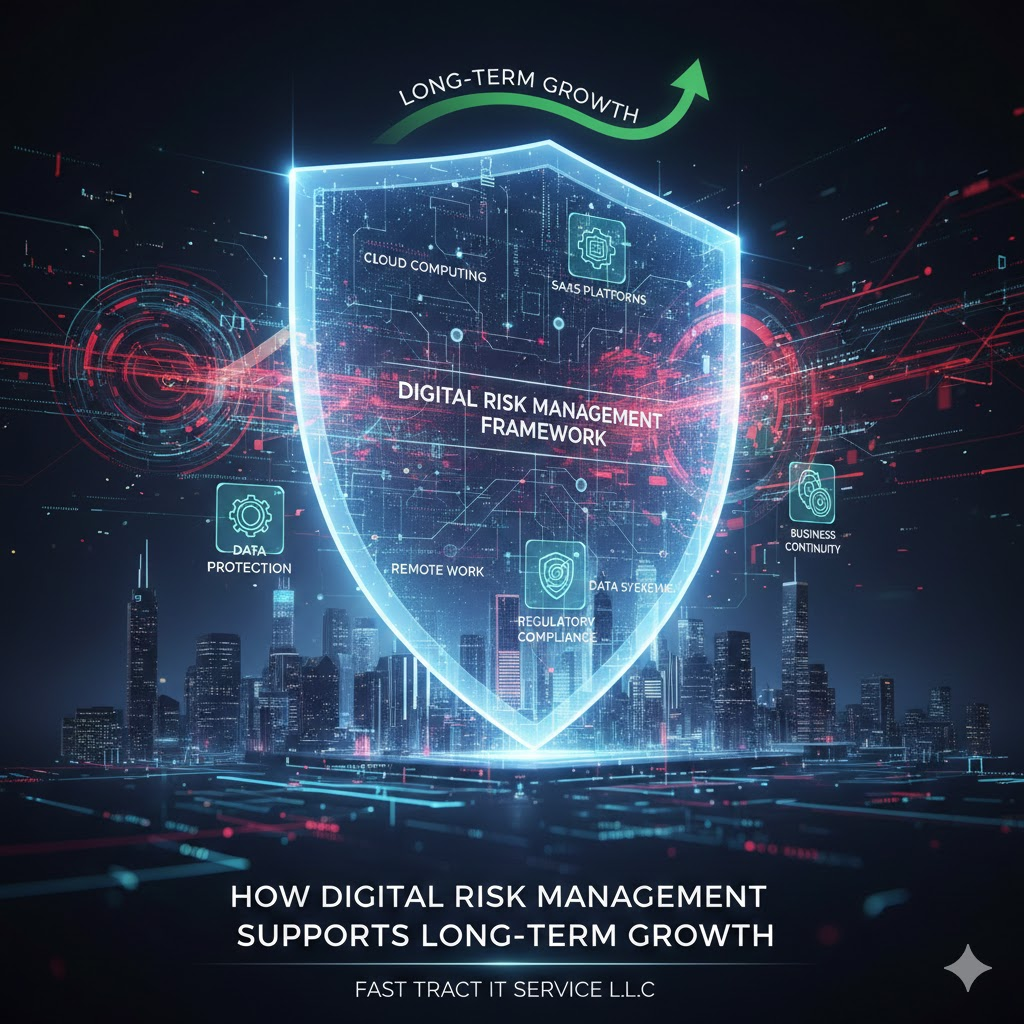
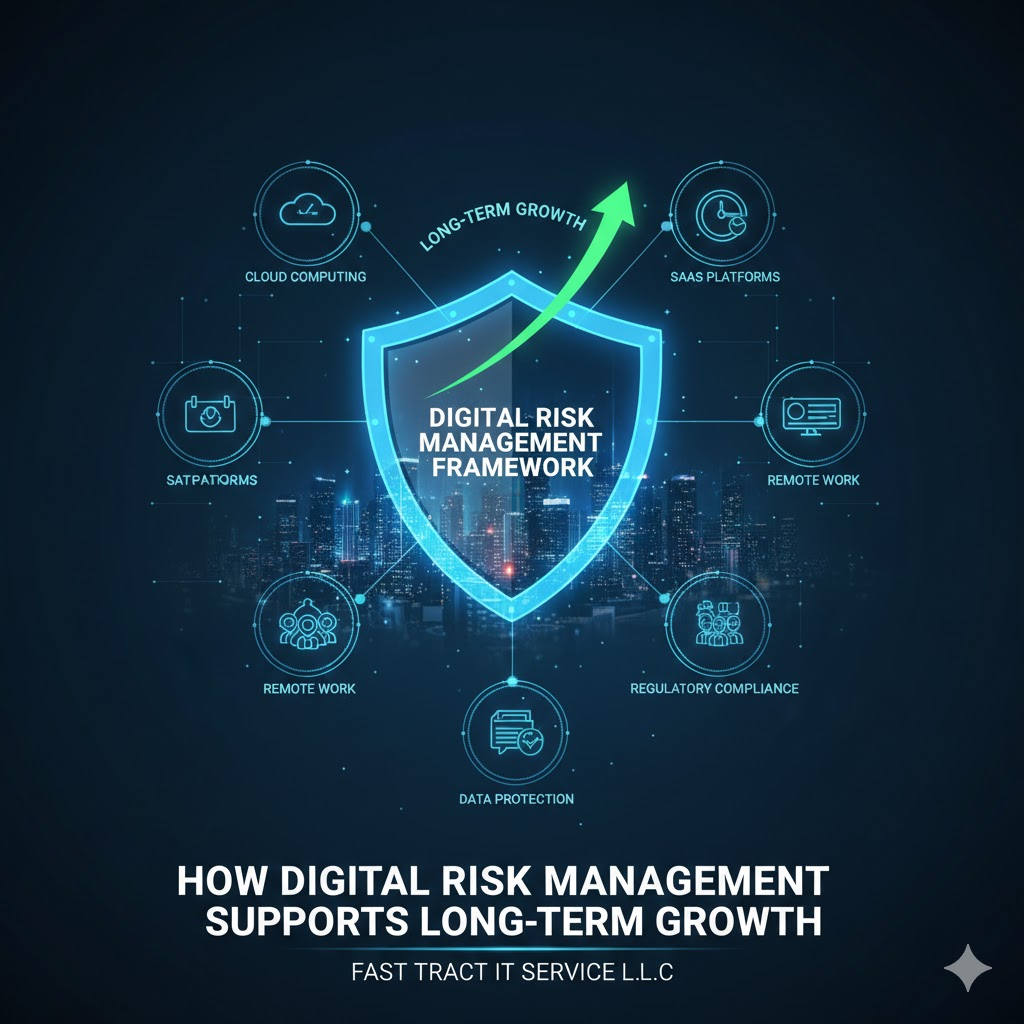
FAST TRACT IT SERVICE L.L.C provides strategic insight into how implementing a structured digital risk management framework enables organizations to innovate confidently, protect critical assets, and achieve sustainable long-term growth.
In today’s digital-first economy, businesses depend heavily on cloud computing, SaaS platforms, remote work environments, AI systems, and interconnected supply chains. While these technologies drive efficiency and innovation, they also introduce new vulnerabilities. Cyber threats, regulatory changes, operational disruptions, and third-party risks can quickly undermine growth strategies.
A well-designed digital risk management framework ensures that organizations can identify, assess, and mitigate risks proactively—without slowing innovation.
What Is a Digital Risk Management Framework?
A digital risk management framework is a structured approach to identifying, analyzing, mitigating, and monitoring risks associated with digital assets, systems, and operations.
It integrates cybersecurity, compliance, operational resilience, and governance into a unified strategy.
Core Objectives
A strong digital risk management framework aims to:
- Protect sensitive data
- Ensure regulatory compliance
- Maintain business continuity
- Strengthen stakeholder trust
- Enable secure digital transformation
Rather than reacting to threats, organizations shift toward proactive risk governance.
Why Digital Risk Management Is Critical for Growth
Growth initiatives often involve expanding digital capabilities. However, unmanaged risk can stall progress.
1. Enabling Confident Innovation
Organizations adopting AI, automation, and cloud technologies must balance speed with security.
A digital risk management framework allows companies to:
- Evaluate technology risks before deployment
- Implement security controls early
- Avoid costly remediation later
Secure innovation accelerates time-to-market while minimizing exposure.
2. Protecting Revenue Streams
Cyber incidents and operational disruptions can interrupt revenue generation.
By proactively identifying vulnerabilities, businesses can:
- Reduce downtime
- Prevent financial losses
- Safeguard customer data
This stability supports consistent long-term growth and reduces exposure to the true financial impact of a cybersecurity breach, which can undermine revenue, investor confidence, and strategic expansion efforts.
Strengthening Business Continuity Through Risk Management
Business continuity depends on resilient digital infrastructure.
Risk Identification and Assessment
Enterprises must continuously evaluate risks such as:
- Cyberattacks
- Data breaches
- Cloud misconfigurations
- Insider threats
- Third-party vulnerabilities
Ongoing risk assessments ensure that threats are detected before they escalate.
Incident Response and Recovery Planning
A mature digital risk management framework includes:
- Clearly defined response procedures
- Recovery time objectives (RTO)
- Backup and disaster recovery plans
- Crisis communication protocols
Preparation reduces operational disruption during unexpected events.

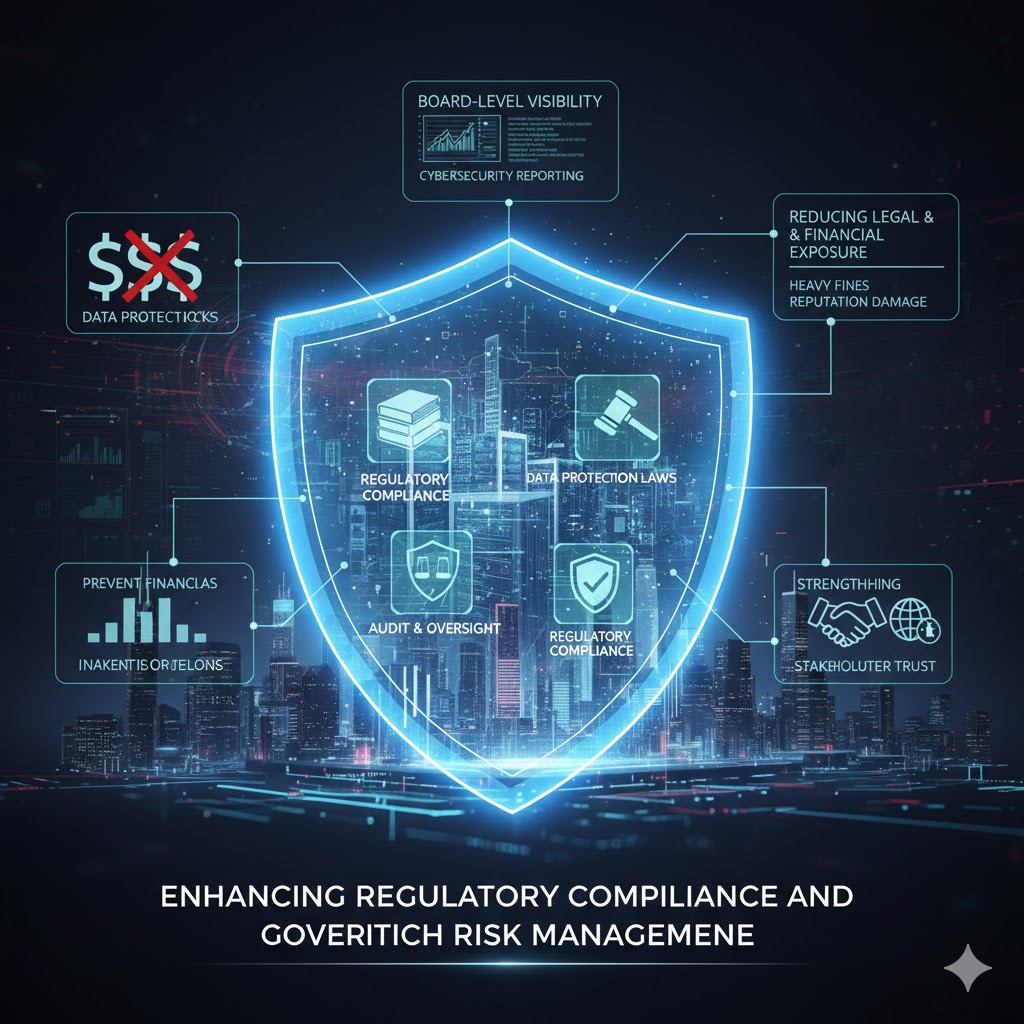
Enhancing Regulatory Compliance and Governance
Compliance requirements are expanding globally. Data protection, privacy laws, and cybersecurity regulations demand strict oversight.
Reducing Legal and Financial Exposure
Non-compliance can result in:
- Heavy fines
- Legal action
- Reputation damage
A structured digital risk management framework ensures organizations meet regulatory expectations while maintaining operational agility.
Board-Level Visibility
Modern governance practices require executive oversight of digital risk exposure.
Boards increasingly expect:
- Regular cybersecurity reporting
- Measurable risk metrics
- Transparent compliance monitoring
Digital risk management strengthens corporate governance and investor confidence.
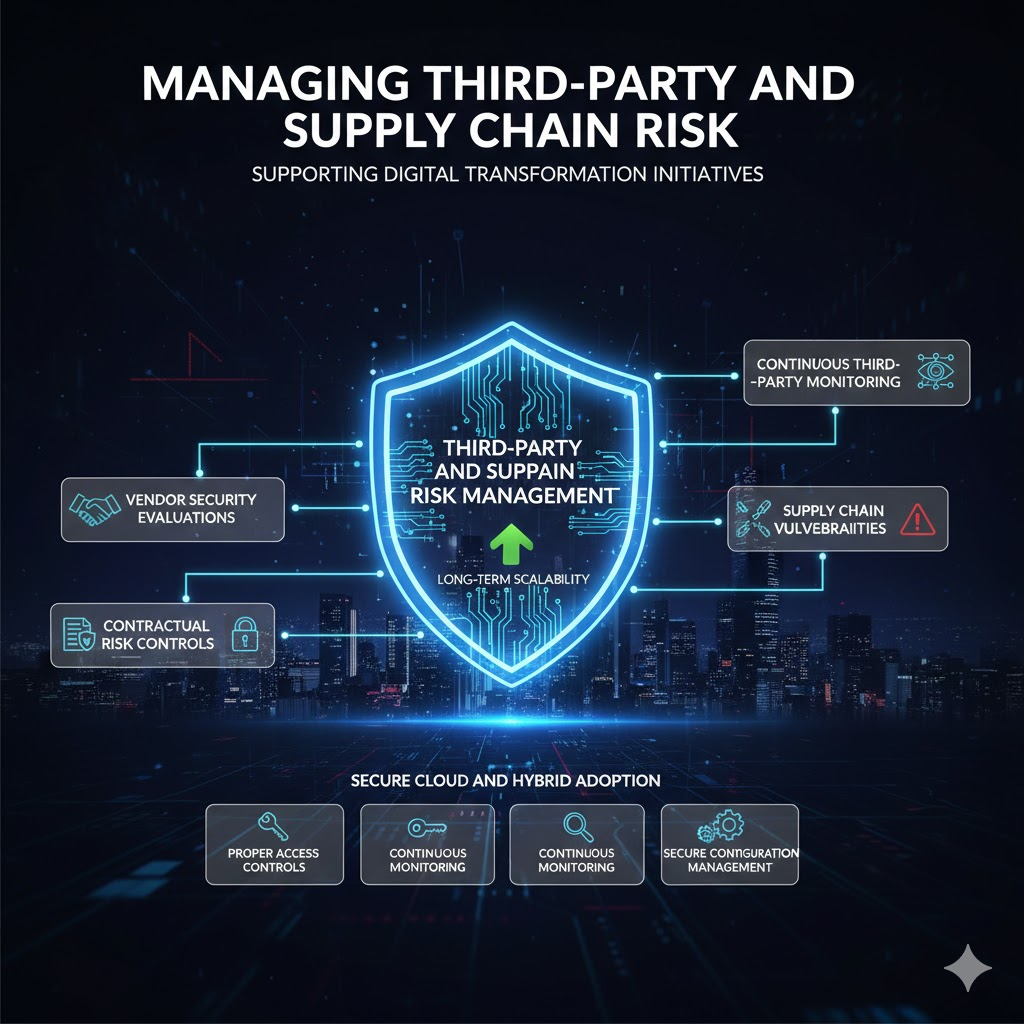
Managing Third-Party and Supply Chain Risk
Modern businesses rely heavily on external vendors and SaaS providers.
Third-Party Risk Assessments
A comprehensive digital risk management framework includes:
- Vendor security evaluations
- Contractual risk controls
- Continuous third-party monitoring
Supply chain vulnerabilities can compromise enterprise systems indirectly.
Supporting Digital Transformation Initiatives
Digital transformation drives efficiency and competitive advantage—but it also increases complexity.
Secure Cloud and Hybrid Adoption
Migrating to cloud environments introduces new attack surfaces.
Risk management strategies ensure:
- Proper access controls
- Continuous monitoring
- Secure configuration management
mplementing structured identity controls through Zero Trust security frameworks further strengthens protection across cloud and hybrid environments.
Integrating Cybersecurity with Enterprise Risk Management (ERM)
Digital risk should not exist in isolation. It must align with broader enterprise risk management strategies.
Holistic Risk Visibility
A unified digital risk management framework connects:
- Cybersecurity risks
- Operational risks
- Financial risks
- Strategic risks
This integration improves decision-making at the executive level.
Data Protection as a Growth Enabler
Customer trust fuels growth. Data protection plays a critical role in maintaining that trust.
Protecting Brand Reputation
Strong data governance reduces breach likelihood, reinforcing brand credibility.
Customers are more likely to engage with organizations that demonstrate responsible data handling practices.
Leveraging Automation and AI in Risk Management
Emerging technologies are transforming digital risk oversight.
Real-Time Threat Detection
AI-driven analytics platforms can:
- Detect anomalies
- Predict potential vulnerabilities
- Automate incident responses
Automation reduces human error and accelerates mitigation efforts.
Continuous Monitoring
Modern digital ecosystems require constant oversight.
A digital risk management framework ensures:
- Ongoing vulnerability scanning
- Policy enforcement
- Compliance reporting
Continuous monitoring strengthens resilience.
Measuring the Impact of Digital Risk Management
To evaluate effectiveness, organizations should track:
- Reduction in security incidents
- Downtime frequency
- Compliance audit results
- Incident response time
- Third-party risk scores
Data-driven insights help refine risk strategies over time.
Competitive Advantage Through Risk Resilience
Organizations with strong digital risk governance gain strategic advantages.
They can:
- Enter new markets confidently
- Accelerate digital innovation
- Maintain operational stability
- Strengthen customer trust
Risk-aware companies are better positioned to adapt to evolving threats and market shifts.
Common Mistakes That Undermine Digital Risk Strategies
Despite best intentions, some organizations struggle with implementation.
Fragmented Risk Management
Siloed departments may manage risk independently, creating blind spots.
Reactive Security Posture
Waiting for incidents to occur before strengthening controls increases long-term exposure.
Lack of Executive Involvement
Without board-level support, digital risk initiatives may lack sufficient funding and strategic alignment.
The Future of Digital Risk Management Frameworks
Digital ecosystems will continue evolving. Emerging challenges include:
- AI-driven cyberattacks
- Quantum computing threats
- Expanding regulatory landscapes
- Increased global data exchange
Organizations that continuously refine their digital risk management framework will remain agile and resilient.
Conclusion
Long-term growth requires more than innovation—it requires stability, resilience, and trust. A well-structured digital risk management framework allows organizations to embrace digital transformation while safeguarding critical assets and maintaining compliance.
By proactively identifying risks, strengthening governance, and integrating cybersecurity into business strategy, enterprises can reduce disruption and protect revenue streams.
Digital risk management is not a barrier to growth—it is a foundation for sustainable expansion in an increasingly complex digital world.
FAST TRACT IT SERVICE L.L.C partners with organizations to implement comprehensive digital risk management framework solutions that align technology innovation with executive governance, ensuring secure, scalable, and future-ready growth strategies.